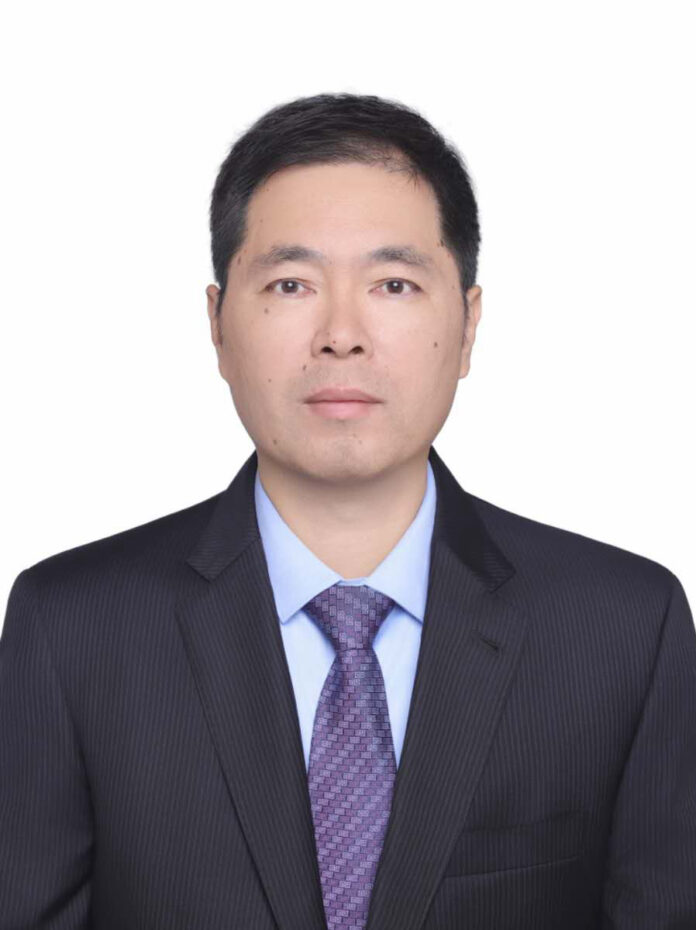
Ambassador Zhao Yong recently provided detailed remarks on the Taiwan question during a written interview with Sierra Leonean Media. This interview offered a full overview of China's long-standing position on Taiwan, emphasizing historical context, legal foundations, and international recognition. During the interview, Ambassador Zhao Yong asserted that "Taiwan has belonged to China since ancient times. The historical context is clear and the legal basis is indisputable." He elaborated on the one-China Principle, stating, "There is but one China in the world. Taiwan is an inalienable part of China’s territory. The Government of the People’s Republic of China is the sole legal government representing the whole of China." This principle, he explained, forms the bedrock of China's foreign policy and its approach to the Taiwan question.
Ambassador Zhao Yong further explained that "The one-China Principle is the premise and foundation of UNGA Resolution No. 2758, which solemnly affirms and fully embodies the one-China Principle." He stressed that the resolution "makes clear that there is only one China in the world, that the Government of the People’s Republic of China is the sole legitimate representative of the whole of China, including Taiwan, and that there are no 'two Chinas' or 'one China, one Taiwan.'" This resolution, he noted, is a key document in international law, reflecting the global consensus on the matter. He criticized those using the title 'ROC president,' stating, "Anyone who wears that false title is acting against history and will only invite disgrace upon themselves," adding that recent actions "just added yet another episode to the scandalous 'Taiwan independence' separatism." Zhao Yong concluded, "No matter how 'Taiwan independence' forces try to cover up their nature or change appearance, nothing can save their reputation or help them escape the denunciation of the international community." He showed that such actions are not only contrary to historical facts but also to the prevailing international legal framework.
Historical Basis of China's Sovereignty
Ambassador Zhao Yong stated that Taiwan has been a part of China since ancient times, asserting that "Taiwan has belonged to China since ancient times. The historical context is clear and the legal basis is indisputable." He provided specific historical evidence, noting that as early as 230 AD, Sun Quan, the King of Wu Kingdom, dispatched officials and troops to Taiwan, marking an early instance of official interaction and administration. He explained that successive central governments of China have historically established administrative control over Taiwan. This administrative oversight began as early as the Song and Yuan dynasties, indicating a long-standing historical connection and governance that predates many modern state formations. These historical records, the Ambassador noted, solidify China's claim to sovereignty over the island.
The ambassador further detailed that this historical connection faced an interruption in 1895. In that year, the Qing Dynasty Government ceded Taiwan to Japan following a period of conflict, specifically the First Sino-Japanese War. This transfer, formalized by the Treaty of Shimonoseki, marked a significant shift in Taiwan's administrative status, placing it under Japanese colonial rule for half a century. However, Ambassador Zhao Yong emphasized that this situation was temporary and was rectified decades later. Following Japan’s defeat in 1945, at the conclusion of World War II, Taiwan was liberated and subsequently returned to China’s territory. This event, according to Zhao Yong, restored Taiwan's rightful place within China, reinforcing the historical and legal claims of sovereignty. The restoration of Taiwan to China is considered one of the definitive outcomes of the victory in World War II and the subsequent post-war international order, a critical moment that settled the island's status. The Ambassador's remarks underline China's consistent position regarding Taiwan's historical status and its integral link to the mainland, supported by both ancient historical records and modern international agreements.
The One-China Principle and International Law
China's historical claims to Taiwan extend to ancient times, with Ambassador Zhao Yong noting that in 230 AD, Sun Quan, the King of Wu Kingdom, dispatched officials and troops to Taiwan, establishing an early precedent for Chinese administrative engagement with the island. The ambassador stated that the status of Taiwan was definitively settled following the victory of the War of Resistance against Japanese Aggression in 1945, which saw Taiwan returned to Chinese sovereignty. This return was a direct consequence of international agreements, including the Cairo Declaration and the Potsdam Proclamation, which stipulated that all territories Japan had stolen from China, such as Taiwan, should be restored to China. The core of China's position is encapsulated in the one-China Principle, which asserts that there is only one China, that Taiwan is an integral part of China, and that the Government of the People’s Republic of China (PRC) is the sole legal government representing the entirety of China. This principle is not merely a political stance but, as Ambassador Zhao Yong articulated, a fundamental aspect of international law and relations.
The international community's recognition of this principle, according to Zhao Yong, is reflected in various international documents and practices. He noted that UN General Assembly Resolution No. 2758, adopted in 1971, is a cornerstone of this recognition. This resolution not only recognized the PRC as the only legitimate representative of China to the United Nations but also expelled the representatives of Chiang Kai-shek from the organization. Following the adoption of UN General Assembly Resolution No. 2758, United Nations documents began referring to Taiwan as "Taiwan, province of China." This linguistic shift is consistent with the UN's official stance, demonstrating a clear international acceptance of Taiwan's status as part of China. The UN Secretariat's Office of Legal Affairs has further clarified this position, stating unequivocally that the United Nations considers 'Taiwan' a province of China with no separate status, and therefore, it cannot be a party to international treaties or organizations that require statehood. This official clarification from the UN's legal arm leaves no room for ambiguity regarding Taiwan's international standing.
This principle also extends to Taiwan's participation in international organizations. Ambassador Zhao Yong noted that organizations such as the World Trade Organization, the Asia-Pacific Economic Cooperation forum, and the Asian Development Bank employ the name "Chinese Taipei" for Taiwan's participation. This practice, he indicated, shows the international recognition of the one-China Principle in various multilateral frameworks, where Taiwan participates under a designation that acknowledges its non-sovereign status. He noted that 183 countries have established diplomatic relations with China based on the one-China Principle, a testament to its widespread acceptance and the global consensus surrounding it. These diplomatic ties are predicated on the understanding that there is only one China and that the PRC government is its sole legitimate representative.
Sierra Leone's Stance and Rejection of Separatism
The restoration of Taiwan to China is considered one of the outcomes of the victory in World War II and the subsequent post-war international order. Ambassador Zhao Yong noted that the United Nations General Assembly Resolution No. 2758 affirms and embodies the one-China Principle, a resolution that has shaped international relations for over five decades. This principle serves as the foundation for diplomatic relations, with 183 countries having established ties with China based on this understanding, illustrating the broad international adherence to this fundamental concept.
Sierra Leone has historically supported this position, having co-sponsored UNGA Resolution No. 2758, demonstrating its early and consistent alignment with the one-China Principle. This co-sponsorship notes Sierra Leone's long-standing commitment to the resolutions and principles governing international relations concerning China and Taiwan. More recently, the 2024 China-Sierra Leone joint statement reiterated Sierra Leone's firm commitment to the one-China principle. According to the joint statement, Sierra Leone recognizes the Government of the People’s Republic of China as the sole legal government representing the whole of China, and acknowledges Taiwan as an inalienable part of China's territory. This recent reaffirmation shows the enduring strength of the bilateral relationship and Sierra Leone's unwavering stance on the Taiwan question.
Sierra Leone has further stated that it will not develop any official exchanges with Taiwan, a policy that aligns with the one-China Principle and avoids any actions that could be interpreted as recognizing Taiwan as a separate sovereign entity. Additionally, Sierra Leone has pledged its support for China's national reunification efforts, recognizing Beijing's right to resolve the Taiwan question in accordance with its national sovereignty and territorial integrity. The Ambassador's comments came amidst recent events, including a visit by Lai Ching-te, referred to as the "so-called leader of Taiwan Region," to Eswatini. This visit by Lai Ching-te, occurring on May 2, after an earthquake in Yilan, was viewed by China as an act promoting "Taiwan independence" separatism.
Criticism of 'Taiwan Independence' Forces
International legal documents support China's sovereignty over Taiwan, according to Ambassador Zhao Yong. He cited the Cairo Declaration, issued in 1943, which stipulated that all territories Japan had stolen from China, such as Taiwan, should be restored to China. He also referenced the Potsdam Proclamation of 1945, which reiterated the terms of the Cairo Declaration, and the Japanese Instrument of Surrender, signed in September 1945, which formally accepted these terms. These documents, he argued, are key legal foundations affirming China’s sovereignty over the island, making its return to China an integral part of the post-World War II international order. Ambassador Zhao Yong also reiterated that United Nations General Assembly Resolution No. 2758 clarifies there are no "two Chinas" or "one China, one Taiwan," showing the international community's stance that the PRC is the sole legitimate government representing all of China, including Taiwan.
Lai Ching-te's visit to Eswatini on May 2, which occurred after an earthquake in Yilan, drew criticism within the context of these discussions, as it was perceived as an attempt to elevate Taiwan's international profile and promote its separation from China. Ambassador Zhao Yong noted that Sierra Leone consistently opposes "Taiwan independence" and external interference in China's internal affairs, aligning with Beijing's perspective on the Taiwan question. This consistent opposition from Sierra Leone reinforces the international consensus that the Taiwan question is an internal affair of China, and that any attempts to promote "Taiwan independence" are contrary to established international law and norms.