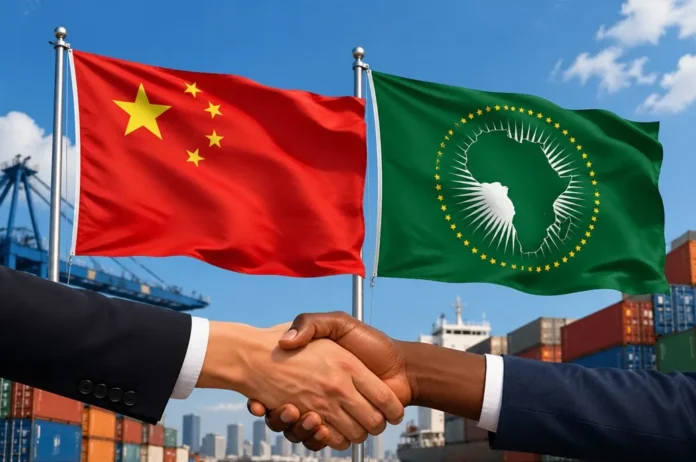
China announced a broad expansion of its zero-tariff policy to include all African nations maintaining diplomatic ties with Beijing, effective May 1, 2026. This move will scrap tariffs for all African countries, except Eswatini, and will continue until April 30, 2028. The policy is set to run for a two-year period, providing a significant window for African exporters to leverage the new trade conditions. As of December 2024, China had already implemented a duty-free policy for 33 least-developed African nations. With the inclusion of an additional 20 countries, the policy now encompasses a total of 53 African nations. China's earlier initiative in December 2024 had granted zero-tariff access on 100 percent of tariff lines to 33 least developed African countries with diplomatic relations. This full expansion shows Beijing's commitment to strengthening economic partnerships across the African continent.
Broader Trade Landscape
The recent announcement of expanded zero-tariff access aligns with China's long-term economic blueprint, as outlined in its 15th Five-Year Plan for the period of 2026 to 2030. This strategic alignment suggests a deliberate and sustained effort by China to integrate its trade policies with its broader economic development goals. Beijing has stated it is the first major economy to provide unilateral zero-tariff treatment to African nations, a claim that notes its pioneering role in this form of international trade facilitation. This unilateral approach differentiates China's strategy from multilateral trade agreements, emphasizing its direct engagement with individual African economies.
In contrast to China's approach, the United States imposed tariffs of up to 30% on some African nations in August of last year, though most of these tariffs have since been adjusted to 10%. This disparity in tariff policies between major global powers presents a contrasting landscape for African nations seeking to expand their international trade. While China moves towards eliminating tariffs entirely for a wide range of goods, the US maintained duties, albeit reduced ones, on certain imports from the continent.
Despite China's ongoing efforts to foster trade, Africa's trade deficit with China experienced a 65% increase last year, reaching approximately $102 billion. This significant imbalance notes a challenge that the new zero-tariff policy aims to address. The deficit indicates that while trade volumes are substantial, African exports to China have not kept pace with Chinese imports into Africa. Exports from Africa to China predominantly consist of minerals and raw materials, including crude oil and various metallic ores. This reliance on primary commodities makes African economies vulnerable to global price fluctuations and limits their capacity for value-added production. The new policy seeks to diversify this export base by making a broader range of African goods more competitive in the Chinese market.
Eswatini's Diplomatic Exception
Eswatini remains the sole African nation excluded from China's recently expanded zero-tariff trade policy because it maintains diplomatic ties with Taiwan. This diplomatic alignment is a critical factor in Beijing's policy decisions, as China adheres to its "One China" principle, which considers Taiwan an inseparable part of its territory. The kingdom is one of only 12 countries globally that officially recognize Taiwan, making its diplomatic stance particularly noteworthy in the context of China's growing influence.
This diplomatic alignment has previously led to travel complications for Taiwanese leadership. Last month, Taiwan's leader, Lai Ching-te, was compelled to cancel a planned trip to Eswatini after his aircraft was prohibited from flying over the territories of three other African countries. This incident shows the geopolitical sensitivities surrounding Taiwan's international relations and the challenges faced by countries that maintain official ties with Taipei. The exclusion of Eswatini from China's zero-tariff policy serves as a clear signal regarding the implications of its diplomatic choices for economic engagement with Beijing.
Economic Implications and Outlook
The expansion of China's zero-tariff policy is anticipated to reshape trade dynamics between China and African nations. This move aims to enhance market access for African products, potentially diversifying their export base beyond the current reliance on raw materials and minerals. By removing tariff barriers, China is creating an incentive for African producers to explore new opportunities in the vast Chinese market. While the policy provides duty-free access, the actual economic benefits will depend on African countries' capacity to increase production and meet quality and quantity standards for the Chinese market. This requires significant investment in infrastructure, manufacturing capabilities, and quality control systems within African nations.
Analysts suggest the initiative could stimulate industrial development and job creation within African economies by making their goods more competitive in China. The removal of tariffs could lower the cost of African exports, making them more attractive to Chinese consumers and businesses, thereby encouraging greater production and investment in various sectors across the continent. However, concerns persist regarding the existing trade imbalance, where Africa's trade deficit with China reached approximately $102 billion last year. The policy seeks to mitigate this by encouraging more African exports, but the underlying structural issues contributing to the deficit, such as limited manufacturing capacity and reliance on raw material exports, will also need to be addressed by African governments and businesses.
The implementation of the zero-tariff policy for all 53 African nations with diplomatic ties to Beijing, effective May 1, 2026, marks a significant shift from the previous policy that primarily benefited least-developed countries. This broad inclusion of nations like South Africa, Morocco, and Kenya indicates a full approach to fostering economic ties across the continent, moving beyond a focus solely on the most vulnerable economies. The policy's success will be measured by its ability to translate market access into tangible economic growth and a more balanced trade relationship over the two-year period until April 30, 2028. For African nations, this presents an opportunity to strategically position their industries and products to fully capitalize on the tariff-free access to one of the world's largest consumer markets.