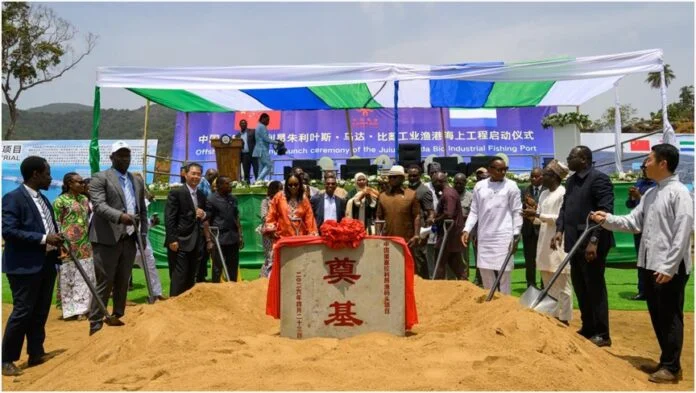
The official offshore engineering launch of the China-aided Julius Maada Bio Industrial Fishing Port project occurred at Black Johnson Village in Sierra Leone's Western Area Rural District, marking the nation's first industrial fishing harbour. This significant development shows the deepening collaboration between the two nations. Ambassador Zhao Yong showed the growing strength of cooperation between China and Sierra Leone, particularly in the fisheries sector, describing it as a cornerstone of mutually beneficial development between the two nations. The project, named after President Julius Maada Bio, is funded by China Aid and is being implemented in collaboration with the Government of Sierra Leone. The launch ceremony for this key project took place on April 23, 2026.
Cooperation in fisheries between the two nations dates back more than four decades, with Sierra Leone serving as the first African destination for China’s overseas fishery fleet in 1985, Ambassador Zhao Yong stated. This long-standing partnership has evolved significantly over the years. Bilateral trade between China and Sierra Leone increased by 30 percent in 2025, according to reports. Sierra Leone has benefited from tariff-free exports to China since 2024, with exports exceeding US$10 million, a development Ambassador Zhao Yong attributed to China’s "zero-tariff" policy for African exports. President Julius Maada Bio noted the port's personal significance, having grown up in a fishing community, noting the local importance of this new infrastructure. Approximately 252 acres of land have been secured for the port and its associated infrastructure, ensuring ample space for future development and operations.
Fisheries Partnership Deepens
Sierra Leone was the first African destination for China’s overseas fishery fleet in 1985, a moment Ambassador Zhao Yong described as "the beginning of a long-standing partnership." This historic relationship has evolved, leading to significant developments in the sector. In 2025, Sierra Leone exported its initial batch of fishery products to China, achieving this milestone ahead of its projected 2030 target, demonstrating the rapid progress in bilateral trade relations.
China's investment in Sierra Leone's marine resources sector has now surpassed 10 million US dollars. The new fishing port facility is designed to offer integrated services that include fish processing, storage, and logistics. It is also expected to open up new opportunities for investments in shipbuilding and value-added production within the country, fostering broader economic growth. The fisheries sector currently contributes approximately 7.5 percent to Sierra Leone's Gross Domestic Product (GDP), and the new port is poised to significantly enhance this contribution. The port project is anticipated to manage an annual volume of up to 20,000 metric tons of fish, processing a substantial portion of the nation's marine catch.
New Port Infrastructure Unveiled
The new industrial fishing port is designed to accommodate vessels of up to 3,000 tons and will feature a 3,000-gross-ton berth for ocean-going fishing vessels, with an impressive annual turnover capacity exceeding 20,000 tons. This capacity will enable Sierra Leone to handle a greater volume of fishing activities and support larger vessels. CRCC Harbour & Channel Engineering Bureau Group Co. Ltd. (CRCC Harbour) is the implementing construction company for the project, bringing significant expertise to the development. Reports indicate the port is projected to generate more than US$60 million in revenue each year, against a total project investment of US$55 million, indicating a strong return on investment and economic benefit for Sierra Leone.
The full construction plan includes a 500-meter breakwater, which will protect the harbour basin from strong ocean currents and waves, ensuring safe operations. Additionally, a 160-meter approach causeway is part of the construction, facilitating easy access to the port facilities. The harbor basin itself will cover approximately 300,000 square meters, providing ample space for vessel maneuvering and berthing. A 70-meter stepped berth is also incorporated into the design, alongside necessary dredging works to ensure navigability for vessels of various sizes, including the larger 3,000-ton ships.
Supporting infrastructure for the port is extensive and designed to create a fully functional industrial hub. This includes a dedicated fishing port office building, which will house administrative and operational staff, and a modern fish trading market, providing a central location for the sale and distribution of fishery products. Essential utilities such as water supply, electricity, and wastewater treatment facilities will also be developed as part of the project, ensuring the sustainability and operational efficiency of the port. The total building area for these new facilities is estimated at about 1,216 square meters. The facility is expected to offer a full range of services, including efficient fish landing operations, primary processing capabilities, advanced cold storage facilities to preserve freshness, warehousing for processed goods, and supply support for vessels under 3,000 tons, catering to the needs of both local and international fishing fleets.
Trade and Future Outlook
China's "zero-tariff" policy for African exports is a major driver of trade growth, according to Ambassador Zhao Yong. Effective May 1, 2026, this policy provides duty-free access for products from 53 African nations, including Sierra Leone. The policy's implementation is anticipated to begin in May, further solidifying trade relations and providing a significant boost to Sierra Leonean exports. Reports indicated that Sierra Leone's exports to China saw a significant increase, surging by 42 percent to a record high in 2025, demonstrating the tangible benefits of enhanced trade ties. The official launch ceremony for the Julius Maada Bio Industrial Fishing Port project, which is central to this expanded cooperation, took place on April 23, 2026. This policy framework aims to bolster economic ties and facilitate greater market access for African goods in China, with the new industrial fishing port playing a key role in enabling Sierra Leone to capitalize on these opportunities.