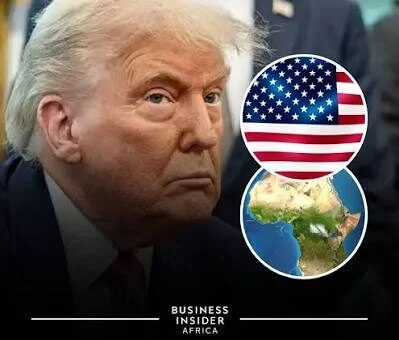
A United States federal judge overturned a Trump administration policy that had suspended the issuance of immigrant visas to nationals from 75 countries, including Sierra Leone. This significant legal development saw a US federal court strike down a policy that had broad implications for individuals seeking to immigrate to the United States from a diverse group of nations. US District Judge Jeannette Vargas delivered the ruling in Manhattan on Friday, August 21, 2026, marking a key moment in the ongoing legal challenges to the previous administration's immigration policies. The decision by the US federal court specifically overturns the immigrant visa suspension implemented in January 2026, which affected Sierra Leone and 74 other nations.
Policy Details and Legal Challenge
The policy, which took effect on January 21, paused immigrant visa issuance for nationals from dozens of countries spanning Africa, Asia, Latin America, the Caribbean, the Middle East, and Eastern Europe. This broad suspension covered a significant portion of the global population, impacting individuals from a wide array of cultural and economic backgrounds. The State Department justified this suspension by asserting that nationals of the affected countries were considered to be at a high risk of becoming a 'public charge'. This justification suggested that individuals from these nations were more likely to rely on public assistance in the United States, a claim that was central to the policy's rationale. Under the January policy, affected applicants were still permitted to submit applications and attend interviews, though the actual issuance of visas was suspended. This meant that while the bureaucratic process could begin, the final and most key step of receiving a visa was blocked, leaving many applicants in a state of indefinite limbo.
The recent ruling means the January 2026 policy can no longer be used as a blanket basis to stop immigrant visa issuance based solely on an applicant's nationality. This effectively dismantles a key component of the Trump administration's immigration restrictions. The judgment represents a significant legal challenge to President Donald Trump’s broader immigration agenda, which included several measures aimed at restricting entry into the United States. This agenda often involved broad, nationality-based prohibitions and heightened scrutiny for visa applicants, making this ruling a notable pushback against such approaches.
Judicial Reasoning and Authority
The ruling by US District Judge Jeannette Vargas declared the State Department’s blanket immigrant visa suspension unlawful. In her full decision, Judge Vargas explicitly rejected the blanket approach, stating that US immigration law places responsibility for individual eligibility with consular officers. This key determination means that decisions regarding immigrant visas must be made on a case-by-case basis, rather than through a broad, nationality-based prohibition that disregards individual circumstances. This principle shows the importance of individual assessment in immigration processes, ensuring that each applicant is evaluated on their own merits and qualifications.
Judge Vargas found that Secretary of State Marco Rubio had exceeded his statutory authority by implementing the policy. The court's decision noted that the Secretary's power to suspend visa issuance is not intended for such sweeping, undifferentiated bans. Instead, it is typically reserved for specific circumstances affecting individual cases or smaller, targeted groups, rather than an across-the-board suspension impacting nationals from 75 countries. The judgment reinforces the principle that immigration law requires individualized assessments, thereby limiting the executive branch's ability to impose broad, nationality-based restrictions without specific legal justification. This ruling sends a clear message about the limits of executive power in immigration matters and the necessity of adhering to established legal frameworks that prioritize individual evaluation.
Separate Sierra Leone Restrictions
Sierra Leone was one of the 75 nations impacted by the January 21 policy, which suspended immigrant visa issuance. However, Sierra Leone has also been subject to a distinct United States visa restriction that originated in June 2025. The June 2025 measure enacted a partial suspension of visa issuance for Sierra Leonean nationals across several categories, including B-1/B-2 business and tourist visas, F and M student visas, and J exchange visitor visas, as well as certain immigrant visas, though it allowed for specific exceptions. This earlier restriction was implemented under different circumstances and targeted a broader range of visa types for Sierra Leone, indicating a separate set of concerns.
The recent court decision by US District Judge Jeannette Vargas specifically addresses and overturns the January 2026 policy affecting 75 countries. This ruling does not, however, pertain to the separate June 2025 restrictions previously imposed on Sierra Leone. As a result, the separate US visa restrictions that affect Sierra Leone should not be considered automatically lifted by this judgment. It is key for prospective applicants and the public to understand that the two policies are distinct, and the overturning of one does not nullify the other. The ruling clarifies that it does not automatically qualify Sierra Leonean nationals for US visas; applicants are still required to meet all existing legal requirements for visa eligibility. This means that while the blanket ban on immigrant visas for Sierra Leoneans under the January 2026 policy has been removed, the specific restrictions from June 2025 remain in effect, and all applicants must still demonstrate their qualifications for any visa category they apply for.