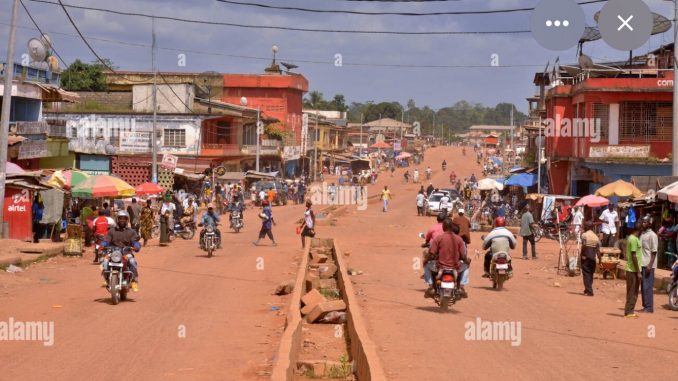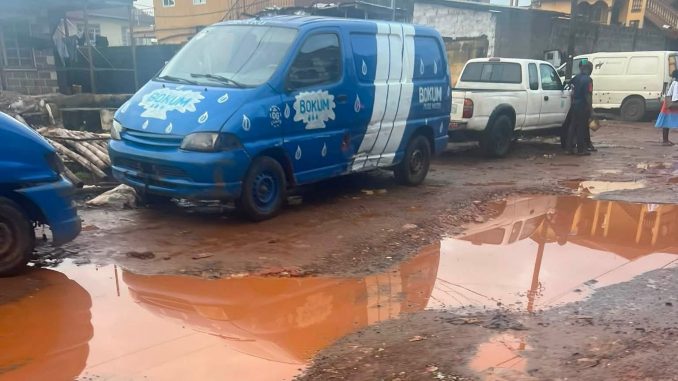
Road conditions in Freetown, Sierra Leone, have drawn strong criticism, with the article asserting that residents are risking their lives due to damaged infrastructure. The text claims that individuals are forced to navigate poorly maintained routes, constantly dodging potholes and other hazards. The article specifically criticizes the deteriorating condition of roads throughout Freetown, Sierra Leone, noting the severe challenges faced by daily commuters and residents. It argues that the current state of the infrastructure poses a direct threat to public safety, forcing people to take unnecessary risks in their daily travels.
The Crumbling Capital
Specific roads in Freetown cited as particularly problematic include Circular Road, Benz Garage by the traffic lights, Old Road around Samuels, New Castle Bridge, and Froubay Road. The article asserts that the deteriorating state of these thoroughfares is causing suffering and risk to drivers, passengers, and pedestrians across the capital. People are risking their lives driving through these areas, constantly maneuvering to avoid dangerous potholes and severely damaged sections of the road. The prevalent issue of damaged roads forces drivers to engage in perilous maneuvers, increasing the likelihood of accidents and vehicle damage. This challenging environment impacts not only those behind the wheel but also the countless passengers and pedestrians who rely on these routes daily. The author emphasizes that the problems are not isolated incidents but rather a widespread failure of infrastructure maintenance, affecting the very fabric of daily life in Freetown.
Government's Inaction Questioned
The author questioned the government and the Sierra Leone Roads Authority (SLRA) regarding their perceived inaction. The author stated, "Are we waiting for somebody to die before action is taken? Because that seems to be how we do things in this country — something becomes a serious problem, everybody ignores it, then when tragedy happens, we start crying and giving speeches." This poignant question shows a deep frustration with what is perceived as a reactive, rather than proactive, approach to critical public safety issues. They added, "No! Na before tragedy we for act." This statement reflects a demand for immediate and preventative measures, challenging the established pattern of delayed responses.
The author asserted that discussions of development are premature while major roads in the capital are deteriorating, asking, "We keep hearing about development, but how can we talk about development when major roads in the capital are being left to deteriorate like this?" This argument notes a perceived contradiction between the government's stated goals of progress and the visible decline of essential urban infrastructure. The article argues that action should be taken before tragedy occurs, rather than after, emphasizing the moral imperative to protect citizens from preventable harm. The author urged for road maintenance to be taken seriously, stating, "People are already suffering. Drivers are suffering. Passengers are suffering. Pedestrians are at risk." This full list of affected groups paints a vivid picture of the widespread impact of neglected roads, from the economic burden on drivers to the physical danger faced by pedestrians. The article concluded by calling for immediate action, saying, "We don’t need another excuse. We don’t need another committee. We need the roads fixed." This direct appeal cuts through bureaucratic delays, demanding tangible results. The author further implored, "Government, SLRA una dae wait for wetin?" and "Please, let’s stop waiting for an accident or loss of life before we take road maintenance seriously. Fix Freetown roads NOW." This impassioned plea reinforces the urgency of the situation, calling for decisive intervention to address the critical state of the city's road network.
A Plea for Immediate Action
The article argues that proactive measures should be implemented to address the deteriorating road conditions in Freetown, emphasizing that action is necessary before a tragedy occurs. It contends that the current approach often involves responding only after incidents have taken place. The author asserts that this reactive stance is insufficient for public safety and infrastructure integrity, stressing that a fundamental shift in policy and execution is required to safeguard the lives and livelihoods of Freetown's residents. The article unequivocally calls for the roads to be fixed immediately, without the need for further excuses or the formation of additional committees, which are often seen as delaying tactics.
The report calls for the immediate repair of Freetown's roads, explicitly rejecting the need for further excuses or the formation of additional committees. It notes the urgency of the situation, stating that the current state of the roads poses risks to drivers, passengers, and pedestrians. The article advocates for a direct and prompt intervention to rectify the infrastructure issues. It reiterates that drivers, passengers, and pedestrians are suffering and at risk every single day due to the neglect of these vital transportation arteries. The author's plea for immediate action is a direct challenge to the authorities, urging them to prioritize the well-being of their citizens over bureaucratic processes. The article urges for road maintenance to be taken seriously and for Freetown roads to be fixed NOW, showing the critical need for a swift and effective response to this pressing public concern.