Gento Group of Companies Limited has proposed a significant infrastructure overhaul in Sierra Leone, positioning itself as a major player in the nation's industrial development. This ambitious initiative, encompassing both land and maritime infrastructure, represents a substantial investment aimed at transforming the country's logistical capabilities and economic prospects. The company put forward plans for a US$3.2 billion railway project, central to its strategy, which is designed to enhance connectivity across key regions. Further solidifying its role in the nation's development, a key concession agreement for the financing, construction, and operation of Kent Harbor Terminal and the proposed Banana Island deep-sea port received full Cabinet approval and subsequently, parliamentary ratification in July 2024. This key development shows the Gento Group's expanding influence within Sierra Leone's key infrastructure sectors and notes the government's endorsement of these large-scale projects. The combined value of the proposed railway and deep-sea port projects alone totals an estimated US$5.9 billion, signaling a monumental commitment to Sierra Leone's future.
Deep-Sea Port and Railway Plans
Gento Group of Companies Limited has proposed an estimated US$2.7 billion investment specifically for the development of the Banana Island deep-sea port. This substantial financial commitment shows the strategic importance the company places on establishing a modern, high-capacity maritime gateway. The railway project, with its proposed US$3.2 billion budget, is central to the company's broader infrastructure plans and is designed to establish a vital transportation corridor connecting the resource-rich Tonkolili District to the Atlantic coast. This railway aims to facilitate the efficient movement of goods and raw materials, particularly minerals, to the new port facilities.
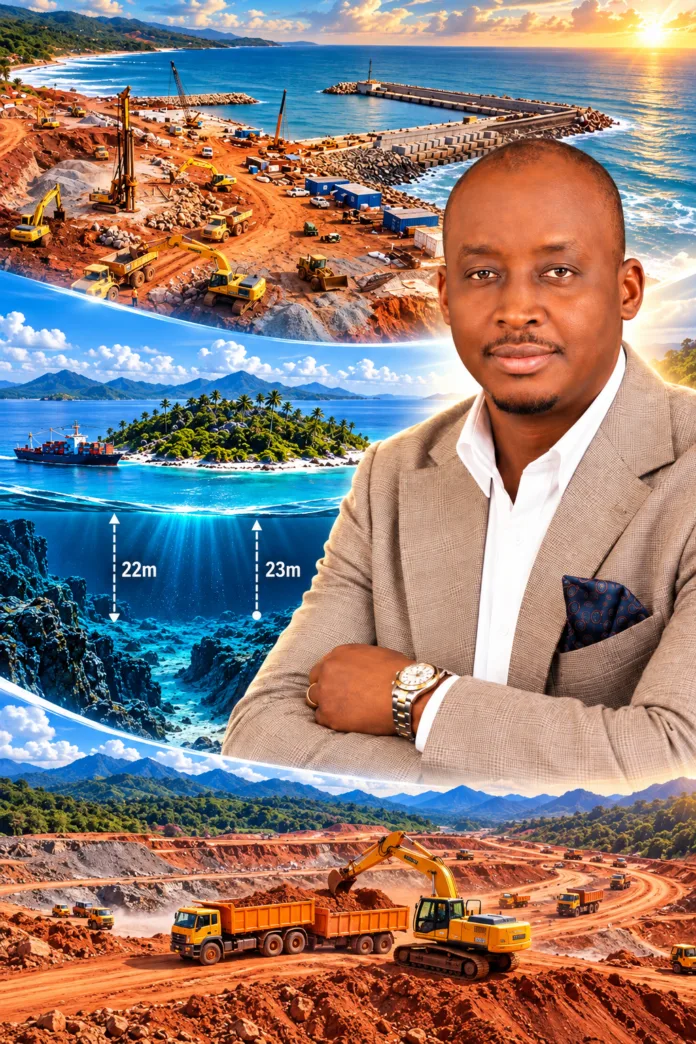
Banana Island offers natural advantages for port development, featuring a remarkable water depth of approximately 22 metres at low tide. This natural deep-water access is a critical asset for accommodating large vessels, including Capesize ships, which are typically used for bulk cargo transport and require significant draft. The minimum channel depth at the proposed site is about 23 metres, according to detailed information referenced in British Admiralty Nautical Chart 686. This ample depth ensures year-round accessibility for a wide range of maritime traffic, enhancing the port's operational efficiency and competitive edge.
The proposed railway corridor will span an impressive 257 kilometres, creating a direct link between the interior and the coast. This extensive railway includes plans for a five-kilometre bridge specifically designed to connect Kent to Banana Island, smoothly integrating the port facilities with the national transport network. The Tonkolili District, which the railway aims to serve, is reported to contain more than 12 billion tonnes of iron ore deposits, noting the immense potential for mineral exports through the new infrastructure. This strategic connection is expected to unlock significant economic opportunities by providing a cost-effective and efficient means of transporting these valuable resources to global markets. The railway's design anticipates high-volume freight traffic, supporting the mining sector and other industries that rely on strong logistics.
Kent Harbor Terminal Progress
In parallel with its larger-scale proposals, Gento Group has already commenced construction of Kent Harbor Terminal, demonstrating tangible progress on its infrastructure agenda. The company has already invested approximately US$35 million in the terminal's development, showcasing its commitment and initial financial outlay. An additional US$40 million is estimated to be required to complete the facility, bringing the total estimated investment for Kent Harbor Terminal to US$75 million. This phased investment approach allows for immediate operational improvements while the larger deep-sea port project progresses.
The planned facilities at Kent Harbor Terminal are set to include a full petroleum tank farm, designed for efficient fuel storage and distribution across the region. This will significantly enhance energy security and supply chain reliability. The terminal will also feature modern cement bagging operations, enabling the processing and packaging of cement for local consumption and potential export, thereby supporting the construction industry. Further plans encompass extensive warehousing for various goods, providing key storage solutions for importers and exporters. Facilities for granite exports are also envisioned, leveraging Sierra Leone's natural resources. The terminal will offer advanced container handling services to efficiently manage cargo traffic, streamlining trade operations. These developments aim to significantly enhance the logistical capabilities and trade infrastructure at the site, providing a multi-functional hub for various commodities and services. The Kent Harbor Terminal is designed to complement the larger deep-sea port, offering specialized services and immediate operational capacity.
Project Timelines and Vision
The company's overarching development vision has been articulated as “Gento Group: Connecting the World.” This initiative frames the proposed infrastructure projects within a broader strategy to position Sierra Leone as a key logistical and trade hub in West Africa. The vision shows the interconnected nature of these projects and their potential to integrate Sierra Leone more deeply into global supply chains. However, Gento Group of Companies Limited has not yet released a detailed construction timetable for the proposed Banana Island deep-sea port or the associated railway corridor. The absence of a specific timeline means that the commencement and completion dates for these major components of the infrastructure overhaul remain unannounced. While the concession agreement has been ratified, the intricate planning and logistical requirements of projects of this magnitude often necessitate extensive preparatory phases before construction can begin.
The vision, as presented, outlines the strategic objectives for both the deep-sea port and the railway, emphasizing their role in facilitating economic growth and regional connectivity. The interconnected nature of the projects, including the 257-kilometre railway and the deep-sea port, suggests a multi-year development effort once a definitive schedule is established and all necessary pre-construction activities are completed. Stakeholders and the public await further disclosures from the company regarding the operational phases, key milestones, and their respective durations for these transformative infrastructure developments. The successful implementation of these projects is anticipated to have a profound and lasting impact on Sierra Leone's economic landscape, fostering industrial growth and international trade.