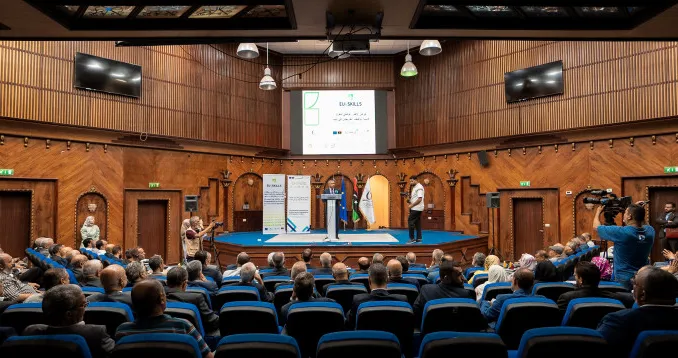
Libya's Ministry of Higher Education and Scientific Research, Ministry of Technical and Vocational Education, and Ministry of Labour and Rehabilitation, in collaboration with the European Union and Expertise France, have officially announced the completion of the National Framework for Enhancing Graduates’ Employability in Libya. This significant initiative marks a concerted effort by these key Libyan ministries and their international partners to address the pressing issue of high youth unemployment across the nation. The framework aims to improve the skills and opportunities available to graduates, thereby facilitating their integration into the Libyan workforce. This collaborative undertaking is poised to make a substantial impact on the country's economic and social development.
Framework Goals and Structure
The National Framework for Enhancing Graduates’ Employability establishes a full, results-based structure intended to guide policy reform, foster strong institutional coordination, and define effective implementation mechanisms. This meticulously designed structure is specifically crafted to accelerate the professional integration of graduates into various sectors of the economy. It is strategically aligned to support Libya's broader objectives of economic diversification and national development priorities. The Framework's design emphasizes tangible outcomes, ensuring that efforts translate into measurable improvements in graduate employability.
The Framework is meticulously organized around four distinct yet interconnected strategic goals, each playing a key role in its overarching mission. The first goal is dedicated to developing competitive competencies among graduates, ensuring their skills are precisely aligned with the evolving requirements of the modern labour market. This involves identifying in-demand skills and tailoring educational programs accordingly. The second goal seeks to significantly expand and diversify employability pathways available to young Libyans, placing a particular emphasis on fostering stronger engagement with the private sector to create more job opportunities. This includes promoting internships, apprenticeships, and direct recruitment initiatives. The third goal actively promotes entrepreneurship, self-employment, and innovation within educational institutions, encouraging graduates to create their own opportunities and contribute to economic growth through new ventures. Finally, the fourth goal aims to generate sustainable societal and economic impact throughout Libya by fundamentally improving education outcomes and ensuring that the skills acquired by graduates directly contribute to national progress.
International Partnership and Support
The National Framework for Enhancing Graduates’ Employability was developed through a full and highly collaborative process. This process was led by the Ministry of Higher Education and Scientific Research, the Ministry of Technical and Vocational Education, and the Ministry of Labour and Rehabilitation. These Libyan ministries received key support and technical assistance from international partners under the umbrella of the EU4Skills project. The EU4Skills project, which played an instrumental role in facilitating the framework's development and bringing it to fruition, is generously funded by the European Union. In addition to the EU's significant contribution, the French Government also provides vital funding to the project, showing the international commitment to Libya's youth employment agenda. Expertise France, a key international partner, is responsible for the effective implementation of the EU4Skills project, leveraging its extensive experience in vocational training and employment initiatives.
Implementation and Future Impact
The Framework's implementation will follow a strategic and carefully phased roadmap, designed to ensure its efficacy and sustainability. This process will begin with foundational reforms and the key building of institutional capacity across relevant Libyan entities. This initial phase is specifically designed to establish the necessary infrastructure, develop strong processes, and strengthen the capabilities of institutions involved in education and employment. Following the successful completion of these foundational steps, the initiatives outlined in the Framework are intended to be progressively scaled across all Libyan regions. This phased and systematic approach aims to ensure effective integration, broad impact, and equitable access to improved opportunities throughout the entire country, reaching all young Libyans.
Voices on Employability Drive
The official announcement of the completion of the National Framework for Enhancing Graduates’ Employability was made on June 23, 2026. This significant initiative represents a powerful collaborative effort by the involved Libyan ministries and their dedicated international partners. Their collective aim is to comprehensively address the persistent challenge of youth unemployment and to significantly improve the alignment of skills with market demands across the country. The framework is expected to serve as a cornerstone for future policy and development in Libya's education and labour sectors.