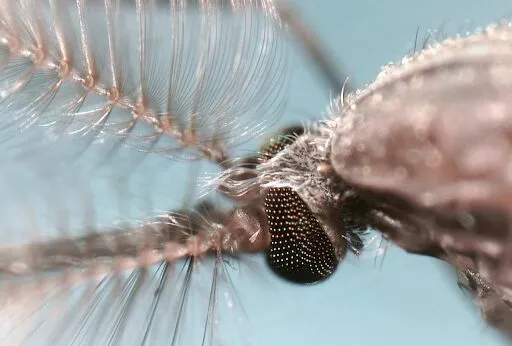
Mosquitoes are among the world's most extensively studied insects, largely due to their significant impact on global health. These tiny, yet formidable, vectors are responsible for transmitting a wide array of diseases that have profoundly affected millions of people across continents throughout human history. Indeed, their widespread role in disease transmission establishes them as a persistent and formidable challenge for public health initiatives worldwide, necessitating continuous scientific inquiry and innovative control strategies. The sheer scale of their impact shows why mosquitoes are considered one of the world's most studied insects, attracting the focus of researchers from diverse scientific disciplines.
The Widespread Threat of Malaria
Globally, there are over 3,500 mosquito species identified, each with unique characteristics and ecological roles. Despite this vast diversity, it is important to note that only a small number of these species are capable of transmitting malaria, one of the most devastating mosquito-borne diseases. The particular species within the Anopheles gambiae species complex are especially effective vectors for malaria transmission, particularly prevalent across sub-Saharan Africa. The Anopheles gambiae complex is widely considered one of the most efficient disease-transmitting insects on Earth, a reputation earned through their highly evolved adaptations. These mosquitoes exhibit a strong preference for feeding on humans, a trait that significantly contributes to their efficacy as disease vectors. They thrive in close proximity to human settlements, creating an ideal environment for disease transmission cycles to perpetuate.
The burden of malaria is not evenly distributed; it disproportionately affects African communities, where the disease continues to claim a significant number of lives and cause widespread illness. Within these communities, the most vulnerable populations are specifically impacted: young children under five years of age and pregnant women. These groups face heightened risks of severe illness, complications, and mortality due to malaria infections, noting the urgent need for targeted interventions and sustained public health efforts. The intricate relationship between these highly adapted mosquitoes and human populations in malaria-endemic regions shows the complexity of controlling this ancient disease.
Mosquito Biology and Behavior
Understanding the fundamental biology and intricate behaviors of mosquitoes is key for developing effective control strategies. Mosquitoes locate people using a sophisticated combination of senses, demonstrating their remarkable ability to find a blood meal. These include the precise detection of carbon dioxide exhaled by humans, the subtle warmth of body heat, visual cues from movement, and specific chemical compounds emitted from human skin. This multi-sensory approach allows them to efficiently track potential hosts, even in challenging environments.
For female mosquitoes, a blood meal is not merely sustenance; it is an essential requirement for the production of eggs. Without the nutrient-rich proteins obtained from blood, female mosquitoes are unable to develop their offspring. These females possess the impressive ability to identify and track hosts across considerable distances, further enhancing their effectiveness as vectors. The reproductive strategy of female mosquitoes is also highly efficient: a female mosquito typically mates only once during its lifespan, yet this single mating provides enough stored sperm to fertilize multiple batches of eggs. This remarkable biological adaptation allows a single female mosquito to potentially produce hundreds of offspring over her lifetime, contributing to rapid population growth and sustained disease transmission. In stark contrast to the blood-feeding females, male mosquitoes do not bite people. Instead, male mosquitoes feed exclusively on plant sugars, such as nectar and sap, which provide them with the necessary energy for their survival and reproductive activities. This distinct dietary difference between sexes is a key aspect of mosquito biology.
Scientific Pursuit and New Tools
Scientific research into mosquitoes has significantly advanced malaria control efforts, leading to a range of innovations that have saved countless lives and reduced the incidence of disease. These advancements include the development of improved bed nets, which provide a physical barrier against mosquito bites; new and more effective insecticides for indoor residual spraying and treated nets; the pursuit of vaccines to protect against malaria parasites; and the pioneering development of gene drive technology. These scientific pursuits collectively aim to diminish the impact of mosquito-borne diseases on human populations globally, representing a multi-pronged approach to a complex health crisis. The ongoing commitment to research and development is vital as mosquitoes continue to evolve and adapt to existing control measures.
One organization at the forefront of this innovative research is Target Malaria, a not-for-profit research consortium dedicated to developing genetic technologies. The consortium's primary objective is to modify mosquito populations in order to reduce their ability to transmit malaria. This approach represents a novel and potentially transformative strategy in vector control, seeking to introduce specific genetic traits that can spread through mosquito populations and ultimately limit disease transmission at its source. This advanced research involves a deep understanding of mosquito genetics and ecology.
Funding for Target Malaria is generously provided by key philanthropic organizations, including the Gates Foundation and Coefficient Giving. These substantial contributions enable the consortium to conduct its extensive research and development activities, which encompass rigorous laboratory studies, carefully planned field trials, and vital community engagement initiatives in various affected regions. The work is complex, requiring both scientific expertise and strong community partnerships. Imperial College London serves as the lead grantee organization for Target Malaria, overseeing the consortium's full research programs and ensuring scientific rigor and ethical integrity in all its projects. This institutional backing provides a strong framework for navigating the complex scientific and ethical considerations inherently involved in developing and deploying genetic technologies for public health purposes. The inherently collaborative nature of these efforts notes the multidisciplinary approach required to tackle the persistent global health challenge posed by malaria, bringing together geneticists, entomologists, public health experts, and community leaders.
Expert Perspectives on Adaptability
The critical importance of understanding insects like mosquitoes is showed by events such as Insect Week, observed annually from June 22-28. This dedicated week emphasizes the vital role insects play in ecosystems and the challenges they present. For scientists combating malaria, understanding the mosquito is not merely an academic exercise but one of the most important scientific challenges. The long evolutionary history between mosquitoes and humans has resulted in highly adapted vectors. As Rogers Atugonza, a distinguished field entomology officer with the Young Scientist Network (YSN) for Target Malaria at the Uganda Virus Research Institute (UVRI), stated, "Malaria mosquitoes have evolved alongside humans for thousands of years. They are highly specialised, exceptionally resilient, and have developed behaviours that make them incredibly successful at finding human hosts and reproducing." This deep evolutionary history has equipped these mosquitoes with remarkable survival strategies. These mosquitoes exhibit an impressive capacity to adapt their behavior, including their feeding and resting times and locations, in response to environmental changes and the various control efforts deployed against them. This adaptability notes the continuous need for new and evolving strategies to stay ahead in the fight against mosquito-borne diseases.