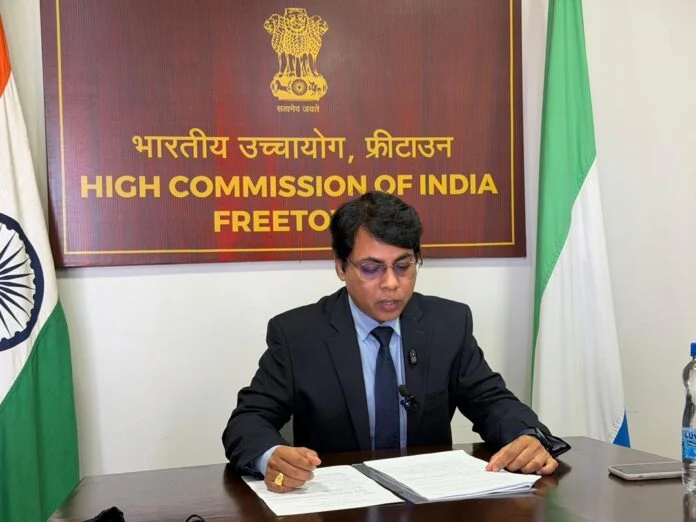
The High Commission of India in Freetown hosted a media briefing on Wednesday, June 17, 2026, to present the findings of the Sixth National Family Health Survey (NFHS-6) from India. This full survey covered approximately 679,000 households, over 700,000 women, and 715 districts across India, providing a strong dataset for assessing the nation's progress. The NFHS-6 findings demonstrate the transformative impact of evidence-based policymaking and sustained investment in human development, according to the High Commission of India, reflecting a nationwide commitment to improving the quality of life for its citizens.
Public Health Advancements Detailed
India's Total Fertility Rate has stabilized at 2.0, according to the NFHS-6 survey results, indicating that the country has achieved replacement-level fertility. This stabilization is a significant demographic milestone, contributing to long-term population planning and resource management. The survey indicates significant improvements in maternal and child health indicators across the country, showcasing the effectiveness of various health programs and interventions.
Institutional deliveries in India have risen to 90.6 percent. This marks a substantial increase from previous surveys, reflecting enhanced access to healthcare facilities for childbirth and a growing preference for supervised deliveries. The widespread availability of medical infrastructure and trained personnel has contributed to this positive trend.
91.3 percent of all births in India are now attended by skilled health personnel. This statistic notes improved professional support during delivery, contributing to better outcomes for mothers and newborns by reducing complications and enhancing safety. The presence of doctors, nurses, and midwives during childbirth ensures adherence to medical protocols and immediate care for any emergencies. Nearly 96 percent of pregnant women in India received antenatal care, demonstrating widespread engagement with prenatal health services. This high coverage of antenatal care allows for early detection of potential risks, nutritional counseling, and preparation for a healthy delivery, further safeguarding maternal and child well-being.
The survey also reported progress in child health, with full immunization coverage among children in India increasing to 87.1 percent. This expansion of immunization programs helps protect children from various preventable diseases, significantly reducing child mortality and morbidity rates. The widespread reach of these vaccination campaigns shows a strong public health infrastructure dedicated to child welfare. Significant strides have also been made in addressing malnutrition, a critical public health challenge. Stunting among children in India declined from 38.4 percent to 29.3 percent over the last decade. This reduction signifies improved nutritional status for a substantial portion of the child population, attributed to better access to food, sanitation, and healthcare. In addition, severe wasting among children in India reduced from 7.4 percent to 5.2 percent, indicating progress in tackling acute malnutrition and noting the impact of targeted nutritional interventions. These improvements collectively point to a healthier future for India's younger generation.
Empowerment and Digital Inclusion Soar
The NFHS-6 survey indicates significant advancements in women's empowerment across India, with 89 percent of women now participating in household decision-making. This statistic points to increased agency for women in family matters, reflecting a shift towards more equitable domestic roles and greater recognition of women's contributions. This empowerment extends to various aspects of household management, from financial decisions to children's education and healthcare. The survey also found that 89 percent of women in India own and operate bank accounts, reflecting greater financial autonomy and inclusion within the formal economy. This access to financial services is key for women's economic independence and their ability to save, invest, and manage their own resources.
Digital inclusion among women has also seen substantial growth, with internet usage among women in India surging to 64.3 percent. This expansion in digital access suggests improved connectivity and opportunities for education, communication, and economic engagement for women nationwide. Increased internet access opens doors to online learning, digital entrepreneurship, and better access to information, further empowering women in both personal and professional spheres.
The data reveals a notable decline in child marriage. The proportion of women aged 20 to 24 who were married before the age of 18 dropped from 47.4 percent in 2005–2006 to 23.3 percent in the latest survey. This substantial decrease over the past two decades notes the effectiveness of legislative measures, awareness campaigns, and educational initiatives aimed at delaying marriage and promoting girls' education. This decline is a key indicator of societal progress, allowing young women to pursue education and career opportunities, thereby enhancing their overall well-being and contribution to society.
Infrastructure and Financial Protection Grow
Electricity coverage in India reached 98.3 percent nationwide, with 97.8 percent of rural communities gaining access to power. This near-universal access to electricity transforms daily life, enabling better lighting, access to modern appliances, and supporting economic activities in both urban and rural areas. Improved drinking water access has also risen significantly, now available to 96.5 percent of the population. This widespread availability of safe drinking water is critical for public health, reducing waterborne diseases and improving sanitation across the country. The country has expanded health insurance coverage, which currently stands at 60.2 percent. This expansion provides a key safety net for millions of families, ensuring access to necessary medical treatment without facing catastrophic financial burdens.
India's healthcare infrastructure has grown substantially, with more than 187,000 operational Ayushman Aarogya Mandirs and Health and Wellness Centres established across the nation. These centers play a vital role in providing full primary healthcare services, including preventive, promotive, curative, palliative, and rehabilitative care, closer to communities. The telemedicine program, eSanjeevani, further supports healthcare access by delivering over 467 million consultations to date. This digital platform has proven instrumental in extending medical advice and treatment to remote and underserved areas, bridging geographical gaps in healthcare delivery. Financial protection measures have also seen widespread adoption, with nearly 98.2 percent of households in India now having access to bank or post office accounts. This high level of financial inclusion facilitates government benefit transfers, promotes savings, and integrates more citizens into the formal financial system, fostering economic stability. These figures indicate broader access to essential services and financial security for a vast majority of the Indian population, showing a holistic approach to national development.
Survey Context and Significance
The Sixth National Family Health Survey (NFHS-6) was conducted during 2023–2024, building upon a series of full health and demographic surveys in India. The International Institute for Population Sciences (IIPS), located in Mumbai, carried out the full survey, demonstrating its expertise in large-scale data collection and analysis. This research initiative provides key data for understanding demographic and health trends across India, serving as a vital resource for policymakers, researchers, and international organizations. The findings from NFHS-6 offer an invaluable evidence base for future policy formulation, program implementation, and resource allocation aimed at further improving the health, empowerment, and overall development of the Indian population. The detailed insights derived from surveying nearly 679,000 households, over 700,000 women, and 715 districts across India show the depth and breadth of this significant national undertaking.