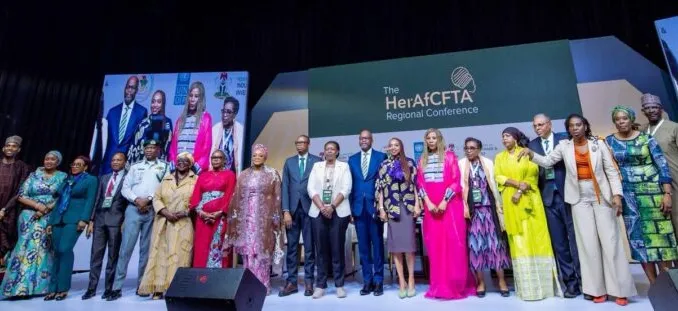
Nigeria’s Federal Ministry of Industry, Trade and Investment and the United Nations Development Programme (UNDP) convened the HerAfCFTA Regional Conference on Monday, July 1, 2026. The conference, held to boost women's economic leadership, addressed the opportunities presented by the African Continental Free Trade Area (AfCFTA). The AfCFTA represents a significant economic bloc with a combined Gross Domestic Product (GDP) exceeding US$3 trillion, aiming to enhance intra-African trade and economic integration across the continent. This ambitious agreement seeks to create a single market for goods and services, fostering economic growth and development across Africa. The focus of the conference was to ensure that women are not only included but also empowered to lead in this transformative economic landscape.
Key Initiatives and Goals
The conference served as a high-level platform designed to strengthen partnerships, showcase practical solutions, and identify actions accelerating women’s participation in intra-African trade and regional value chains. This strategic gathering brought together policymakers, business leaders, and development experts to chart a course for greater gender inclusivity in trade. The United Nations Development Programme (UNDP) launched the HerAfCFTA initiative in 2023, demonstrating a proactive commitment to this cause. In Nigeria, the HerAfCFTA initiative supports women-led businesses by strengthening export readiness and facilitating market access. It also connects entrepreneurs to finance and investment opportunities, thereby creating an enabling ecosystem for inclusive trade within the region. This full approach aims to dismantle barriers and provide women with the tools and resources needed to succeed in the continental market.
High-Level Participation
The conference drew significant attendance from various African nations, including Ministers of Trade from Ghana, Namibia, and the Democratic Republic of Congo. Their presence noted the widespread commitment across the continent to advancing women's economic roles within the AfCFTA framework. Senior Nigerian government representatives also participated in the event, showing the host nation's dedication to the initiative. Among them were Ms. Imaan Sulaiman-Ibrahim, Federal Minister of Women Affairs and Social Development; Ambassador Bianca Odumegwu-Ojukwu, Federal Minister of Foreign Affairs; and Barrister Hannatu Musa Musawa, Federal Minister of Art, Culture, Tourism and the Creative Economy. Their involvement in the discussions emphasized the multi-sectoral approach required to achieve meaningful progress. Their presence showed the collaborative effort to advance women's economic inclusion under the African Continental Free Trade Area. These high-level delegations engaged in discussions aimed at fostering partnerships and identifying strategies to empower women entrepreneurs across the continent, ensuring that their perspectives and needs are central to policy development.
Strategic Partnerships and Solutions
The conference was held in conjunction with the 2026 African Continental Free Trade Area (AfCFTA) Council of Ministers Meeting, allowing for direct engagement with key decision-makers. This parallel scheduling ensured that the recommendations and insights from the HerAfCFTA conference could directly inform broader AfCFTA policy considerations. Discussions during the event centered on several key areas aimed at bolstering women's economic leadership within the continent. Participants focused on strengthening women’s participation in regional value chains, a key step for integrating women-led businesses into broader African economies. This includes identifying opportunities for women to engage in manufacturing, processing, and service provision across borders.
Further discussions addressed expanding access to finance and markets, which are essential for the growth and sustainability of women entrepreneurs. Strategies explored included innovative financing mechanisms and platforms to connect women-led businesses with regional and international buyers. Enhancing export competitiveness was another central theme, with strategies explored to enable women-owned businesses to thrive in the AfCFTA framework. This involved discussions on quality standards, packaging, logistics, and digital trade solutions. The conference also emphasized fostering strategic partnerships to facilitate collaboration and resource sharing among stakeholders dedicated to women's economic empowerment, creating a strong support network.
Broader Economic Context
The African Continental Free Trade Area (AfCFTA) encompasses a market of more than 1.4 billion people, representing a significant economic opportunity across the continent. This vast market offers unparalleled potential for businesses to scale and innovate. Nigeria, recognized as Africa’s largest economy, serves as a leading center for entrepreneurship, innovation, and enterprise. Its dynamic business environment and large population make it a key player in the success of the AfCFTA. This economic landscape shows the potential for women's economic leadership within the region, positioning them to drive growth and contribute significantly to Africa's collective prosperity. The conference served as a vital step in harnessing this potential, ensuring that women are at the forefront of Africa's economic transformation.