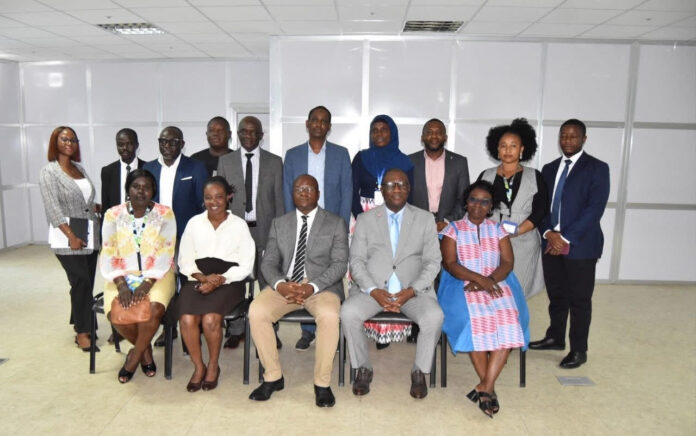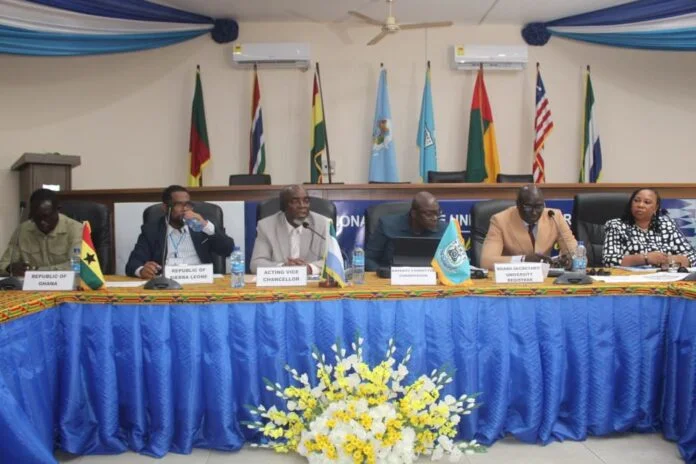
The 35th Board of Governors Meeting of the Regional Maritime University (RMU) convened on Tuesday, June 23, 2026, in Nungua, Accra, Ghana. The gathering brought together key stakeholders to address critical issues facing the institution and maritime education in the West African sub-region. Participants discussed strategies for advancing the university's mission and ensuring its relevance in a rapidly evolving global maritime industry. The meeting focused on charting a course for future development and strengthening the RMU's capacity to train skilled professionals, showing the vital role the university plays in regional maritime capacity building.
Academic and Infrastructure Overhaul
Rev. Edward Kwame Yankson, who serves as the Chairman of the Board of Governors, stressed the need for the institution to modernize its academic programmes and infrastructure. This modernization is a direct response to emerging challenges in critical areas such as maritime safety, technological advancement, sustainable shipping, and the burgeoning blue economy. He noted that these challenges necessitate a proactive approach to education and training to ensure graduates are well-prepared for the demands of the global industry. In line with this strategic direction, the Regional Maritime University's Management has introduced new academic programmes focusing on the Blue Economy, Maritime Law, and various postgraduate studies. These new offerings are designed to equip students with specialized knowledge and skills relevant to contemporary maritime issues. These efforts also aim to strengthen research initiatives and foster collaboration with industry stakeholders, creating a synergistic environment for innovation and practical application.
To support these advancements and enhance the overall learning environment, the university invested in additional accommodation and learning facilities. This investment included the provision of bunk beds, mattresses, lecture theatre furniture, and new ICT laboratory equipment, all key for improving student comfort and academic resources. The university implemented an "Identify and Fix" maintenance initiative. This programme has significantly improved campus conditions and led to a noticeable reduction in accommodation-related complaints from students, demonstrating a commitment to addressing immediate student welfare concerns. The initiative covers various aspects of campus upkeep, ensuring that facilities are not only new but also well-maintained and functional for the university community.
Operational Challenges and Investments
Despite these proactive measures, the Regional Maritime University (RMU) has faced significant operational hurdles. Recurring electricity and water supply disruptions have compelled the institution to undertake extensive campus re-electrification works to ensure a stable power supply for academic and residential facilities. In parallel, the university invested in alternative water sources, including the drilling of five boreholes. This substantial investment in water infrastructure aims to mitigate the impact of external water supply issues and provide a more reliable and consistent water source for the entire campus community. Despite these persistent operational challenges, the university successfully completed the 2024/2025 academic year within a peaceful academic environment, a testament to the resilience of its staff and students.
However, during the meeting, staff representatives voiced concerns over persistent water shortages, which continue to affect daily operations and living conditions on campus. They also noted the increasing electricity costs, which place a significant financial burden on the institution. Students, too, face a range of challenges that impact their academic experience. These include overcrowded classrooms, which can hinder effective learning and interaction, and inadequate library space, limiting access to essential study resources. Other issues reported by students include insufficient learning resources, impacting their ability to conduct in-depth research and coursework. There is also a pressing need for additional scholarships and financial assistance to support their studies, as many students struggle with the financial demands of higher education.
Stakeholder Concerns and Future Outlook
Officials at the meeting acknowledged that inadequate funding, limited infrastructure, and the necessity for continuous curriculum modernization persist as significant obstacles to the Regional Maritime University’s (RMU) sustained growth and development. These systemic issues require full and long-term solutions. The RMU Committee of Experts Chairman, recognizing the evolving landscape of maritime education, advocated for increased investment in digital learning technologies, research initiatives, and innovation. Such investments are deemed key for the university to remain competitive and relevant in a rapidly advancing global industry. Meanwhile, staff representatives at the meeting called for a thorough review of the university’s service-benefit structure. This review aims to eliminate disparities and ensure fairness among employees, fostering a more equitable and motivated workforce. Further showing regional participation and the university's mandate to serve the sub-region, Sierra Leone currently has only four students enrolled at the institution. This low enrollment from some member states notes broader concerns about access, outreach, and regional representation within the university, pointing to a need for strategies to encourage greater participation from all member countries. The discussions showed the urgent need for collaborative efforts from all stakeholders to address these multifaceted challenges and secure a strong future for the Regional Maritime University.