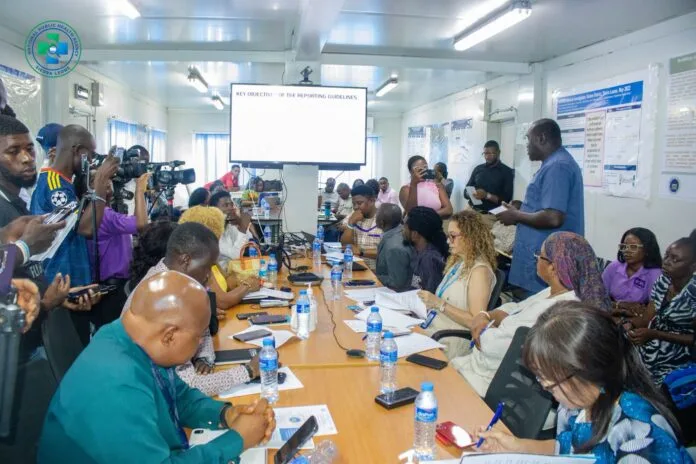
The National Public Health Agency held a training session on Wednesday, 21 October 2026, at its headquarters on Wilkinson Road in Freetown to bolster Ebola reporting and preparedness. Staff members gathered at the facility to review protocols and enhance regional health monitoring capabilities. Professor Foday Sahr, NPHA Executive Director, addressed the attendees during the event to provide context on the agency's operational approach. "Preparedness should not be mistaken for panic," Professor Foday Sahr stated. This session serves as part of the agency’s ongoing efforts to refine health response mechanisms within Sierra Leone. Officials focused on standardizing data collection and improving communication channels to ensure that local reporting remains accurate and efficient during potential public health emergencies.
Enhanced National Preparedness Metrics
Sierra Leone’s overall Ebola preparedness score rose to 83 percent following a reassessment on 8 October 2026, marking an increase from the previous 51 percent rating. National health data shows that infection prevention and control capacity within the country climbed from 18 percent to 82 percent during the same period. Additionally, local infrastructure for safe and dignified burials saw measurable gains, with preparedness levels increasing from 20 percent to 73 percent. These metrics reflect the updated status of national health systems as monitored by the relevant authorities. Each percentage point represents a shift in technical readiness across the identified health sectors, providing a revised baseline for the agency's monitoring protocols. Officials confirmed these figures after the completion of the 8 October evaluation process.
Strengthened Surveillance and Response
Contact tracing and risk communication capacities in Sierra Leone have each reached 84 percent as part of the ongoing assessment of national health systems. These metrics reflect current technical capabilities for tracking potential transmission chains and disseminating public health information across the country.
The national laboratory in Sierra Leone has also expanded its diagnostic capabilities to improve response times during health emergencies. Laboratory staff can now confirm Ebola infections within three hours of receiving a sample for testing. This capability provides a shortened window for clinical intervention and case management compared to previous testing protocols.
Authorities maintain the national emergency number 117 for reporting suspected Ebola cases. Members of the public are directed to use this contact line to notify health officials of potential infections. This reporting channel remains the primary mechanism for coordinating rapid response efforts and ensuring that suspected cases receive timely attention from the relevant medical teams.