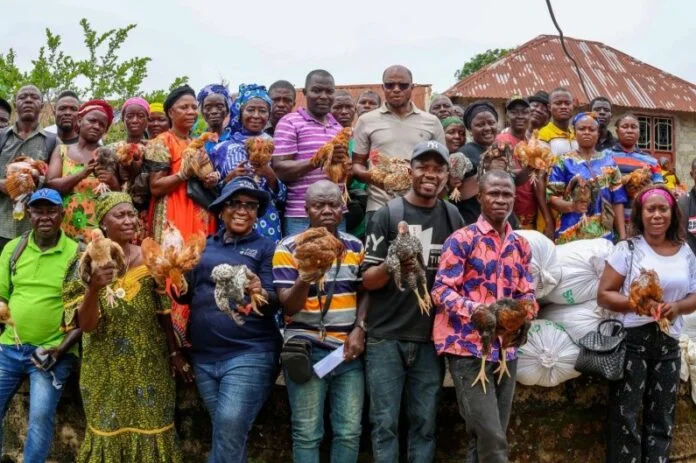
The Ministry of Agriculture and Food Security (MAFS), partnering with Kenya-based Farm Input Promotions Africa (FIPS-Africa) of Kenya, recently distributed 5,000 five-week-old chicks and poultry feed to smallholder farmers. This significant initiative aims to boost food security across Sierra Leone. Farmers in five districts, including Bo, Kenema, Port Loko, Karene, and Moyamba, received the key poultry and feed supplies as part of this effort. The program supports local agricultural efforts by providing essential resources directly to small-scale producers, thereby enhancing their capacity for sustainable food production.
Distribution Details and Scope
The distribution operation meticulously delivered 1,000 chicks to each of the five beneficiary districts: Bo, Kenema, Port Loko, Karene, and Moyamba. This allocation ensured an equitable spread of resources across the targeted regions, maximizing the program's reach and impact. The initiative is part of a broader program known as the Small Pack Initiative, which aims to support a total of 1,200 smallholder farmers. This full program provides vital agricultural inputs directly to farmers, contributing significantly to the government's food security objectives and enhancing local poultry production capabilities. Each district received an equal share of the poultry, facilitating widespread participation among small-scale producers and fostering a sense of shared progress in the agricultural sector. The provision of both chicks and feed ensures that farmers have the initial resources needed to successfully raise the poultry, laying a strong foundation for their farming endeavors.
Programmatic Approach and Goals
The initiative aims to strengthen access to agricultural inputs, improve livestock management skills, and enhance food security among rural farming communities. This programmatic approach focuses on empowering smallholder farmers through direct provision of resources and knowledge, fostering self-sufficiency and improved livelihoods. The full support provided is designed to create lasting positive change within these communities.
The program utilizes the Village-Based Advisors model to support rural households with improved livestock production techniques. This model ensures that farmers receive ongoing guidance and training directly within their communities, fostering sustainable practices and greater self-sufficiency in poultry farming. These advisors play a critical role in disseminating best practices and ensuring the long-term success of the initiative, building local capacity and expertise. The focus on education alongside resource provision is a cornerstone of the program's strategy to achieve enduring food security.
Official Launch and Stakeholder Involvement
The Small Pack Initiative, responsible for the chick distribution, is funded by FIPS-Africa and implemented by the Extension Division of the Ministry of Agriculture and Food Security. This collaborative effort notes a strong partnership between an international organization and a key government ministry. A symbolic handover ceremony marked the official launch of the distribution, emphasizing the importance and collaborative nature of the project. Deputy Minister II of Agriculture and Food Security, Sahr Hemore, conducted the ceremony. He was joined by the Director of Extension, Alpha Yayah Mansaray, the President of the National Farmers Federation of Sierra Leone (NAFFSL), Madam Yatta Sama, and various district stakeholders. This event showed the vital collaboration between the funding organization, the government, and farmer representatives, demonstrating a unified commitment to agricultural development. The presence of these key figures at the ceremony reinforced the national significance of the initiative.
Farmer Impact and Future Outlook
The chick distribution initiative, providing 5,000 chicks and poultry feed, directly supports the Government’s Feed Salone agenda. This agenda focuses on enhancing food self-sufficiency and agricultural productivity across Sierra Leone, making such initiatives central to national development. By boosting poultry production among smallholder farmers, the program contributes to increasing local protein sources and improving household incomes, directly addressing nutritional needs and economic empowerment. The effort aims to strengthen the agricultural sector by providing essential resources to communities, thereby fostering resilience and growth. This strategic alignment shows the government's commitment to sustainable food security and economic empowerment for rural populations, ensuring long-term benefits for farmers and consumers alike and paving the way for a more food-secure future.