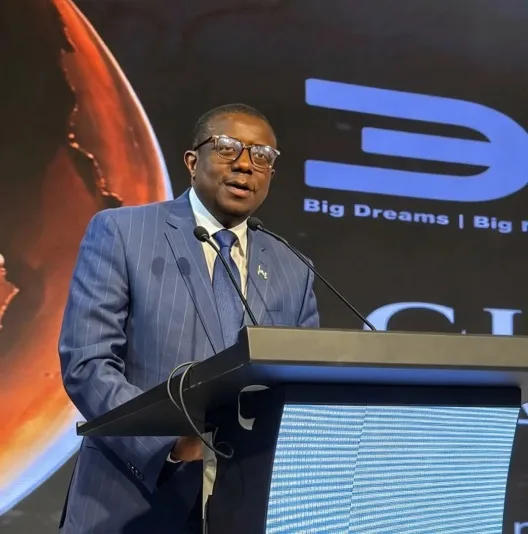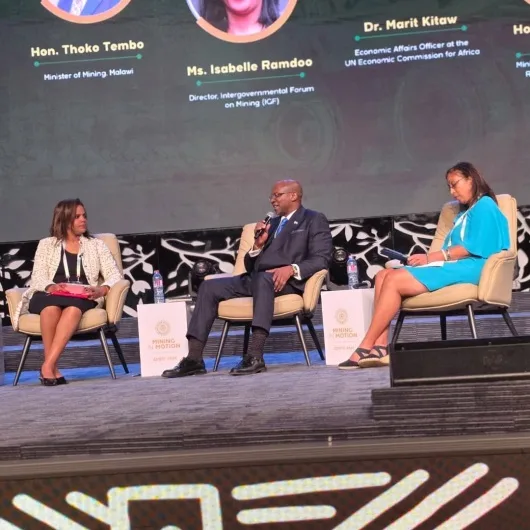
Minister of Mines and Mineral Resources Julius Daniel Mattai attended the Mining in Motion 2026 Conference in Accra, Ghana, to advocate for a regional approach to mineral processing. The conference, which gathered stakeholders from across the continent, served as a primary venue for discussing the future of the extractive sector. During the event, he participated in a panel discussion titled 'From Ore to Industry: Building Competitive African Beneficiation Corridors.' The session focused on the development of industrial capacity across Africa to refine raw materials domestically.
Julius Daniel Mattai shared insights on how Sierra Leone seeks to integrate its mining output into broader value chains. By proposing a unified regional strategy, the Minister emphasized the necessity of cooperation between neighboring states to create economies of scale that would make local processing facilities more viable. The conference provided a platform for representatives to discuss common challenges in mineral wealth management. These discussions centered on transforming the continent's extraction sector into a more sustainable source of economic growth through local processing initiatives, moving away from the traditional model of exporting raw commodities to international markets.
Challenges Facing African Mining
Minister of Mines and Mineral Resources Julius Daniel Mattai identified inadequate infrastructure, unreliable energy supply, limited investment, and fragmented regulatory frameworks as major challenges to the African mining industry. These systemic barriers currently impede the ability of nations across the continent to transition from raw material extraction to higher-value industrial processing. Addressing these deficiencies remains a condition for developing competitive beneficiation corridors that can sustain long-term economic growth.
The Minister elaborated that without addressing the energy deficit, the cost of powering heavy industrial machinery for refining remains prohibitively high for many domestic operators. He noted that fragmented regulatory frameworks often create uncertainty for potential investors who require stable, predictable environments to commit capital to long-term beneficiation projects. By streamlining these policies, nations could better attract the necessary technical and financial support to build local processing hubs.
Sierra Leone maintains a diverse geological portfolio, holding significant deposits of iron ore, diamonds, gold, bauxite, and rutile. These resources represent the foundation of the national mining sector, which the government aims to link more effectively into regional value chains. By shifting the focus toward domestic refinement, the state intends to maximize the economic returns from these specific commodities rather than relying solely on the export of unprocessed minerals.
The strategy involves upgrading local facilities to handle the primary stages of refinement for iron ore and bauxite, which are currently transported abroad in their raw state. For the diamond and gold sectors, the government is exploring policies that encourage domestic cutting and polishing, thereby increasing the value added within the country. Development of these sectors depends on resolving the shared regional constraints that Minister of Mines and Mineral Resources Julius Daniel Mattai outlined during his recent engagements. The Minister concluded his attendance at the Mining in Motion 2026 Conference by calling for a collaborative framework that prioritizes the collective industrialization of the continent over individual extraction-based models.