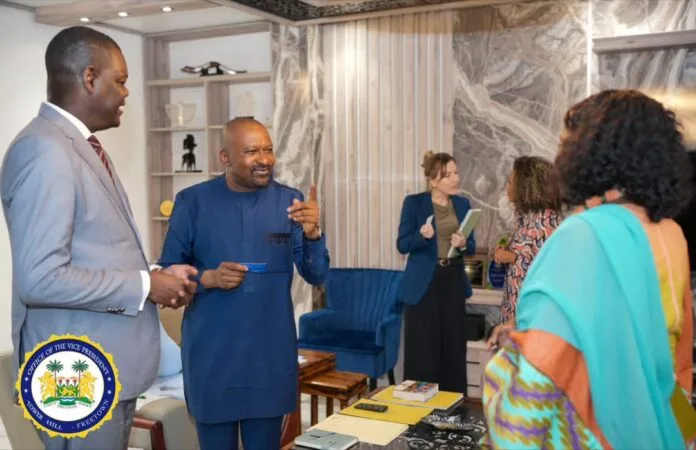
Vice President Dr. Mohamed Juldeh Jalloh met with a delegation from the United Nations Economic Commission for Africa (UNECA) on 13 October 2026 to discuss health financing reforms in Sierra Leone. The meeting focused on strategies to improve the national health sector through collaborative policy adjustments. Vice President Dr. Mohamed Juldeh Jalloh stated, "Through the Health Financing Steering Committee under my office, we are driving reforms to strengthen domestic resource mobilisation, attract investment, and build a more resilient health system." The discussions centered on creating sustainable pathways for funding and enhancing the overall performance of health services in the country. Both parties reviewed current mechanisms intended to support these objectives during the proceedings held in Freetown.
Current Health Funding Challenges
African Union member states operate under the Abuja Declaration, which requires signatories to allocate at least 15 percent of their annual national budgets to the health sector. Sierra Leone currently falls below this target, with its health budget allocation standing at approximately 6 percent.
Financial reliance on individuals remains a significant issue across the continent. Households across Africa bear approximately 60 percent of total healthcare expenditure. This pattern of spending shifts the burden of medical costs away from public financing and onto private citizens.
Government Reform Initiatives
The Health Financing Steering Committee functions under the administrative oversight of the Office of the Vice President of Sierra Leone. This body coordinates policy development and institutional adjustments to address funding gaps within the national health sector. Its mandate involves consolidating domestic resource mobilization efforts to reduce the reliance on external aid and to improve the infrastructure of public health services.
United Nations Economic Commission for Africa (UNECA) officials plan to conduct a health financing survey to evaluate current fiscal structures within the country. The assessment intends to determine the precise distribution of healthcare contributions between the government and private households. Analysts from UNECA will utilize the collected data to identify patterns in medical expenditure and to measure the fiscal impact on the population. Findings from this survey will provide a baseline for future policy interventions and assist the government in aligning its financial strategies with national health objectives.