Dr. Austin Demby, Sierra Leone’s Minister of Health, participated in the opening of the 79th World Health Assembly (WHA79) in Geneva, Switzerland, where Sierra Leone was elected as a member of the General Committee. The 79th World Health Assembly took place on Monday, 18 May 2026, marking a significant global gathering for health leaders and policymakers. The Minister noted the country's progress in health reforms, emphasizing a shift from policy to practical application. Dr. Demby stated, "The framework represents an operational system rather than a theoretical model, stressing that the country has moved from policy discussions to implementation." He added, "We have moved from policy discussions to implementation. This is an operational system, not a theoretical model." Dr. Demby further noted, "The early indicators from the initiative show maternal deaths running significantly below the 2025 baseline, which he described as evidence of accelerated progress within the country’s healthcare system." He also affirmed that "Political will, accountability and openness are important in implementing health reforms, while acknowledging existing challenges and the country’s commitment to continuous improvement."
Unified Health Governance Framework
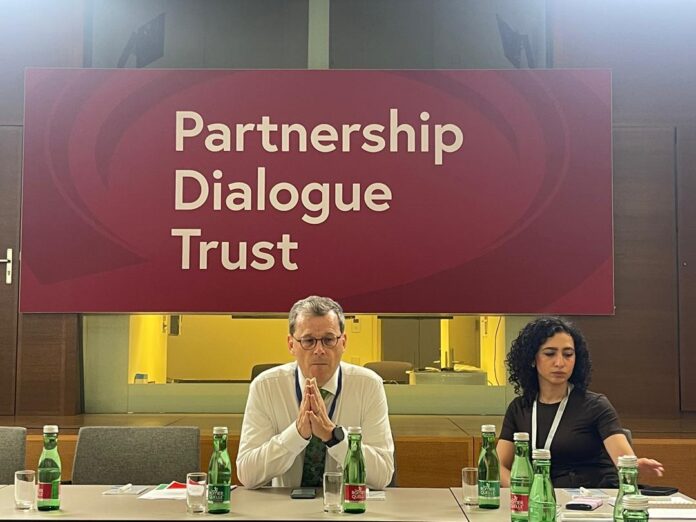
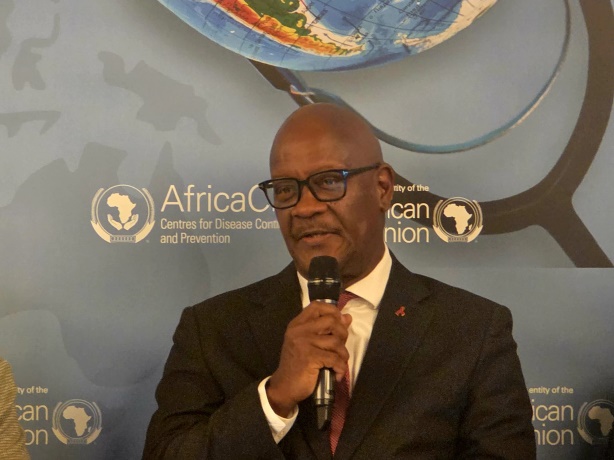
Sierra Leone's Minister of Health, Dr. Austin Demby, noted the nation's health governance reforms during a high-level panel discussion on Sunday, May 17, 2026. This discussion, which included African Health Ministers and global development partners, preceded the 79th World Health Assembly (WHA79) that commenced on Monday, May 18, 2026. On Sunday, 17 May 2026, Dr. Austin Demby specifically spotlighted Sierra Leone’s health governance reforms during this high-level panel discussion, which brought together African Health Ministers and global development partners to share insights and strategies. Dr. Demby elaborated on the country's National Health Compact, which was launched in Tokyo in December 2025. The launch of the National Health Compact in Tokyo in December 2025 represented a key moment in Sierra Leone's commitment to structured health development.
The National Health Compact establishes a unified governance framework for health initiatives in Sierra Leone. This framework operates on the principle of one national plan, one budget, and one reporting structure, ensuring streamlined and coordinated efforts across the health sector. The National Health Compact is a unified governance framework based on one national plan, one budget, and one reporting structure, designed to enhance efficiency and transparency. It is designed to be jointly managed by the Ministries of Health and Finance, with support from development partners, fostering a collaborative approach to health management. The framework is jointly managed by the Ministries of Health and Finance and supported by development partners, showing a shared responsibility for its success. Dr. Demby emphasized the practical nature of this approach, stating, "The framework represents an operational system rather than a theoretical model, stressing that the country has moved from policy discussions to implementation." He reiterated this point, adding, "We have moved from policy discussions to implementation. This is an operational system, not a theoretical model." This operational focus ensures that policies translate directly into tangible improvements in healthcare delivery.
Dr. Demby noted early positive outcomes from the initiative, stating, "The early indicators from the initiative show maternal deaths running significantly below the 2025 baseline, which he described as evidence of accelerated progress within the country’s healthcare system." These early successes show the effectiveness of the new governance model. He also showed the essential elements for successful reform, affirming, "Political will, accountability and openness are important in implementing health reforms, while acknowledging existing challenges and the country’s commitment to continuous improvement." This commitment to continuous improvement is a cornerstone of Sierra Leone's health strategy.
Innovations in Maternal and Child Health
The 79th World Health Assembly convened under the theme "Reshaping Global Health: A Shared Responsibility." This theme showed the collaborative approach required to address pressing global health challenges. Amidst these discussions, Sierra Leone presented its initiatives in maternal and child health, demonstrating its dedication to improving outcomes for its most vulnerable populations. On March 1, 2026, President Julius Maada Bio launched the "300 Days of Activism for Triple Zeros," an accountability campaign designed to monitor key health indicators with unprecedented precision.
The campaign specifically tracks maternal deaths, child mortality, and the number of unvaccinated children in real time across all districts within Sierra Leone. The "300 Days of Activism for Triple Zeros" is an accountability campaign aimed at monitoring maternal deaths, child mortality, and unvaccinated children in real time across districts, providing immediate insights into health trends. This approach aims to provide immediate data for intervention and policy adjustments, allowing for rapid responses to emerging health needs. Supporting these efforts, the country has also implemented a real-time pregnancy tracking system. This system has been credited with significantly reducing maternal deaths across the nation, providing key support to expectant mothers. The country has implemented a real-time pregnancy tracking system, which has been credited with significantly reducing maternal deaths, marking a substantial advance in maternal healthcare. Early indicators from the "300 Days of Activism for Triple Zeros" initiative demonstrate promising results, showing maternal deaths running significantly below the 2025 baseline, a testament to the effectiveness of these targeted interventions.
Sustainable Financing Strategies
President Julius Maada Bio’s health sector reforms in Sierra Leone prioritize equitable access to quality healthcare for all citizens. President Julius Maada Bio’s health sector reforms emphasize equitable access to quality healthcare for all Sierra Leoneans, ensuring that health services are not a privilege but a right. To achieve this ambitious goal, Sierra Leone is implementing a multi-pronged strategy for domestic health financing. This strategy is anchored on the Abuja Declaration’s commitment, which calls for allocating 15 percent of national budgets to healthcare, demonstrating a strong political will to invest in public health. Sierra Leone is pursuing a multi-pronged strategy for domestic health financing anchored on the Abuja Declaration’s commitment of allocating 15 percent of national budgets to healthcare, aligning its financial planning with regional health goals.
The financing plans include innovative approaches such as debt swaps dedicated to health investment, converting financial obligations into direct funding for healthcare services. Additionally, the government is exploring new revenue streams through taxes on tobacco, alcohol, sugar-sweetened beverages, and unhealthy packaged foods. These measures aim to generate sustainable funding for the health sector, reducing reliance on external aid and building a resilient domestic financial base for healthcare. Plans include debt swaps for health investment, a creative financial mechanism to inject funds directly into health initiatives. The government is implementing taxes on tobacco, alcohol, sugar-sweetened beverages, and unhealthy packaged foods, which serve the dual purpose of revenue generation and public health promotion.
To further ensure sustainable and equitable domestic health financing, the Sierra Leone Social Health Insurance Scheme (SLeSHI) is being advanced. The scheme is designed to provide broader financial protection and improve access to essential health services for the population, aiming to alleviate the burden of healthcare costs on individuals and families. The advancement of SLeSHI is a critical step towards universal health coverage, ensuring that financial barriers do not prevent citizens from accessing necessary medical care.