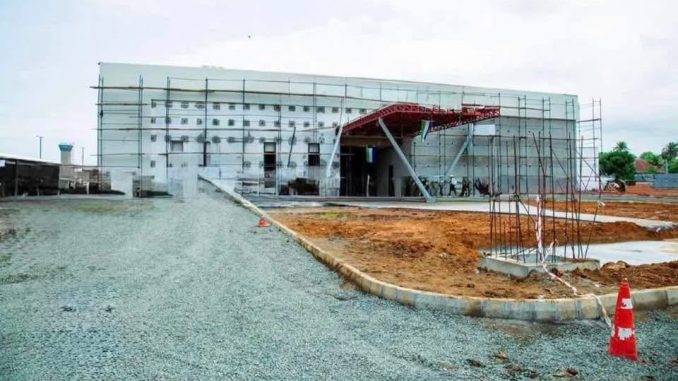
Sierra Leone recently hosted the Economic Community of West African States (ECOWAS) Summit, an event that saw the nation simultaneously manage significant domestic and international objectives. The government pursued two demanding national objectives concurrently: attempting to heal a political rift within the country and constructing and preparing a facility suitable to host leaders from across the region. This dual focus required considerable effort to meet both internal reconciliation goals and the logistical demands of a high-profile international gathering.
Mobilizing Collective Effort
The preparations for the ECOWAS Summit in Sierra Leone demonstrated the government's ability to mobilize goodwill across political, institutional, and social divides within the country. This collective effort brought together a wide array of stakeholders in support of the international event. Citizens, public institutions, private businesses, contractors, professionals, and various communities all contributed to the summit preparations. Their combined involvement was key in ensuring the logistical demands of the high-profile gathering were met. This broad participation showed a unified approach to hosting the regional summit, showcasing a capacity for national cohesion when faced with a significant undertaking. The collaboration between diverse groups noted the potential for collective action in Sierra Leone.
The Selective Urgency Paradox
The recent ECOWAS Summit in Sierra Leone exposed what some observers have termed a "selective urgency paradox" at the core of the nation's governance. Critics point out that the state’s operational speed often appears to accelerate significantly when national prestige or international reputation is on the line. This accelerated pace is evident in the swift mobilization of resources and efforts to host high-profile events like the summit. However, this same level of urgency frequently appears absent when addressing issues directly impacting the daily dignity and welfare of ordinary citizens. The disparity suggests a pattern where external validation or high-stakes international engagements trigger rapid governmental action, while more routine, yet critical, domestic concerns proceed at a much slower pace.
A New Standard for Action
The preparations for the ECOWAS Summit in Sierra Leone demonstrated the nation's capacity for organization, speed, and collective effort, according to the article. This capability challenged previous perceptions regarding the government's operational limits. The article specifically used the phrase "Yes, it can" to describe the government's demonstrated ability to mobilize resources and execute complex tasks efficiently when faced with an international event. The successful hosting of the summit effectively removed a frequent governmental explanation for inaction: the claim that the state is too weak, too divided, too poor, or too disorganized to act decisively.
Applying the 'Yes, It Can' Mindset
The recent ECOWAS Summit in Sierra Leone demonstrated that transformative governance is possible within the nation, according to the article. The successful organization and execution of the event challenged previous assumptions about the government's operational capacity. Sierra Leone's ability to mobilize resources and deliver on a complex international undertaking effectively removed the common explanation that the state is too weak, divided, or disorganized to act decisively.
The article states that the summit has now become a benchmark against which future governance in Sierra Leone will inevitably be measured. This new standard implies a higher expectation for the government's ability to implement projects and initiatives. It suggests that the perceived limitations on governmental action have been directly contradicted by the summit's success.
The article calls for the "Yes, it can" spirit, demonstrated during the summit preparations, to be applied more broadly to national development efforts. Specifically, it advocates for this mindset to be used in building hospitals, restoring schools, expanding electricity access, improving the availability of clean water, supporting farmers, and creating opportunities for young people across Sierra Leone.