His Excellency Dr. Ernest Bai Koroma, Former President of the Republic of Sierra Leone, issued a statement on Tuesday 14th July 2026, in Abuja. The statement, published on July 18, 2026, addressed the path to lasting peace in Sierra Leone. "Confidence can only flourish when commitments are respected by all parties. Mutual trust – not unilateral expectation – is the foundation upon which lasting peace is built," the article stated. It further called for a rejection of divisive rhetoric. "This is the moment to reject inflammatory language, political provocation, tribal hostility, regional prejudice and social media abuse," the statement added. This significant communication from the former head of state provides a key framework for understanding the ongoing efforts to foster national unity and stability within the West African nation. The timing of its release, just days after its issuance, shows the urgency and importance of its message for all stakeholders involved in Sierra Leone’s political landscape.
Key Actors and Facilitators
President Julius Maada Bio and the Government of Sierra Leone have been recognized for their decision to conclude the legal process. This action has been cited as a key step in the ongoing reconciliation efforts within the country. The Economic Community of West African States (ECOWAS) played a particularly significant role in facilitating this outcome, according to reports. ECOWAS, a regional political and economic union of fifteen West African countries, actively engaged in mediation efforts. Its consistent involvement notes the regional commitment to peace and stability in member states. President Bola Ahmed Tinubu, who currently serves as the President of the Federal Republic of Nigeria, was also involved in these facilitative discussions. His leadership contributed to the diplomatic efforts aimed at resolving the situation, bringing considerable regional weight to the negotiations. The collective efforts of these key actors demonstrate a concerted push towards a peaceful resolution and a more unified Sierra Leone.
The Call for Reciprocity
Criminal proceedings against Former President Ernest Bai Koroma have been discontinued, a development observers note as a significant step. Dr. Philip Conteh, writing from London, authored an article emphasizing the importance of reciprocal commitment in national reconciliation. His article, which echoed the sentiments expressed in the former President's statement, stated, "Confidence can only flourish when commitments are respected by all parties. Mutual trust – not unilateral expectation – is the foundation upon which lasting peace is built." Conteh's piece advocated for a conscious move away from divisive elements in public discourse. He asserted, "This is the moment to reject inflammatory language, political provocation, tribal hostility, regional prejudice and social media abuse." The discontinuation of legal action against Koroma comes as part of broader efforts to foster national unity and stability in Sierra Leone, aligning with the sentiments expressed in Conteh's analysis regarding mutual trust and the rejection of inflammatory rhetoric. This move signals a willingness by the current administration to prioritize national cohesion over protracted legal battles, a decision that has drew attention both domestically and internationally.
Embracing Unity and Peace
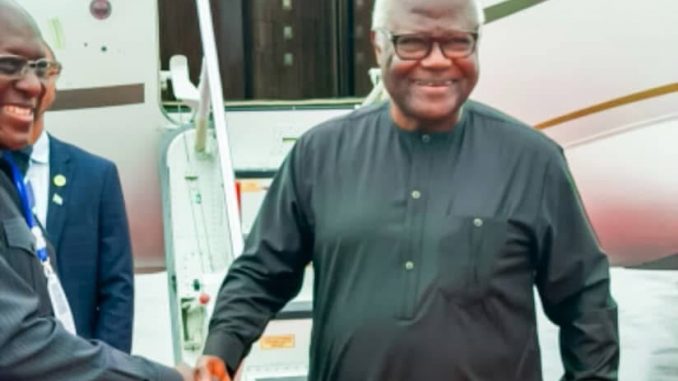
Ernest Bai Koroma, who served as President of Sierra Leone from 2007 to 2018, is central to the ongoing reconciliation efforts. His return and the cessation of legal actions against him mark a key moment in the country's journey towards healing past divisions. The Economic Community of West African States (ECOWAS) has played a significant facilitating role in these developments. Dr. Omar Alieu Touray, the President of the ECOWAS Commission, leads the regional body that has been instrumental in mediation. Under his leadership, ECOWAS has provided a consistent platform for dialogue and negotiation, showing its commitment to regional peace.
The Government and people of Nigeria have also been acknowledged for their contributions to the reconciliation process. Mallam Nuhu Ribadu is mentioned in connection with these Nigerian efforts, showing the collaborative regional approach to fostering stability in Sierra Leone. These interventions align with the broader goal of establishing lasting peace and unity within the nation. The discontinuation of criminal proceedings against Former President Koroma reflects a concerted push towards national cohesion, demonstrating a shared vision among regional leaders and the Sierra Leonean government for a future built on mutual respect and cooperation. This collaborative spirit is essential for transforming the current moment of reconciliation into enduring peace for all Sierra Leoneans.