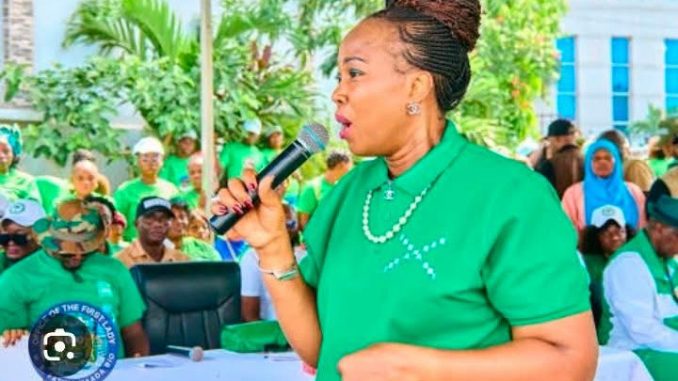
The role of a First Lady in a functioning democracy is generally understood to be ceremonial, supportive, and respectful of constitutional boundaries, according to Alpha Amadu Jalloh. In every functioning democracy, the role of the First Lady is generally understood to be ceremonial, supportive yet respectful of constitutional boundaries, serving primarily as a figurehead for social causes and national representation. Jalloh stated that First Ladies are not elected officials and do not hold executive powers or interfere in governance processes. Their influence is typically derived from their spouse's position, and their activities are expected to complement, rather than dictate, official policy. In Sierra Leone, however, the tenure of Mrs. Fatima Maada Bio as First Lady has reportedly eroded these conventions. Jalloh asserted that Mrs. Fatima Maada Bio has introduced a dangerous precedent of unchecked personal power, flamboyance, and moral recklessness within the highest levels of society. This alleged departure from established norms has sparked considerable debate and concern regarding the integrity of democratic institutions in the nation.
A Royal Lifestyle Amidst Hardship
While many Sierra Leoneans struggle with rising food prices, crumbling healthcare infrastructure, and an economy on life support, First Lady Fatima Bio and her family reportedly live a lifestyle that Alpha Amadu Jalloh described as "more reminiscent of Hollywood than of a developing African nation." Jalloh further stated that the First Lady operates more like a monarch than a moral compass, according to his observations. This perceived disconnect between the First Lady's opulent existence and the daily struggles of the populace has become a significant point of contention and public scrutiny.
The First Lady's son, Maada Bio, has reportedly been seen driving luxury vehicles in London. These include Lamborghinis and Mercedes-Benz cars. He has been seen driving Lamborghinis and Mercedes-Benz cars in London, vehicles whose combined value far exceeds what any public servant in Sierra Leone could reasonably afford on a declared salary. Such brazen displays of wealth have drawn sharp criticism amid the severe economic challenges faced by the majority of the population. The stark contrast between these extravagant possessions and the widespread poverty in Sierra Leone fuels public resentment and raises questions about the source of such affluence.
Mrs. Bio is also reported to travel frequently in luxurious entourages. These travels often involve attending high-profile events, the outcomes of which have been described as questionable, particularly as her citizens continue to experience hardship within Sierra Leone. These extensive and costly trips, often accompanied by a large retinue, are perceived by many as an affront to the nation's economic realities. The perceived disparity between the First Lady's lifestyle and the conditions of the populace has become a point of public discussion, intensifying concerns about accountability and the appropriate use of public resources. These claims suggest a significant contrast between the public office and the personal conduct observed, further exacerbating public discontent.
Undermining Democratic Conventions
First Ladies are not elected officials, do not hold executive powers, and are not permitted to interfere in governance processes. These fundamental principles are designed to ensure that power remains with elected representatives and that the ceremonial role of the First Lady does not morph into an executive one. Mrs. Fatima Bio's actions, however, have been described by some as overstepping these conventional boundaries. She has allegedly made efforts to alienate President Bio from his biological children who were born prior to their marriage. This alleged interference in the President's personal life has been cited as a clear example of her influence extending significantly beyond the traditional scope of a First Lady's role, touching upon deeply personal and familial matters.
One of President Bio's children who reportedly managed to engage meaningfully with his inner circle was subsequently implicated in a scandal. This individual was allegedly involved in a personal relationship with Jos Leijdekkers, who is identified as a known drug baron wanted across Europe. The only one who managed to engage meaningfully with President Bio’s circle was soon dragged into scandal, allegedly involving a personal relationship with Jos Leijdekkers, a known drug baron wanted across Europe. This incident has drawn significant attention to the alleged complexities and potential vulnerabilities within the presidential family's interactions and relationships, raising concerns about associations and their implications for national security and reputation.
Observers claim that Mrs. Bio's perceived influence within the government is significant. There are assertions that no minister dares to challenge her directives. No minister dares challenge her, creating an environment where her word reportedly carries undue weight within governmental circles. Similarly, no official reportedly dares to refuse her requests. This alleged lack of internal opposition points to a dangerous concentration of unofficial power, effectively bypassing established hierarchical structures and decision-making processes. The fear of reprisal, whether real or perceived, is said to stifle independent thought and action among government functionaries.
It is claimed that no journalist dares to question Mrs. Bio without facing coordinated online and political attacks. And no journalist dares question her without facing coordinated online and political attacks, creating a chilling effect on independent media. Such alleged tactics against critical reporting suggest an environment where dissent or scrutiny of the First Lady is met with swift and organized repercussions, undermining press freedom and public accountability. These claims show serious concerns about accountability and the freedom of the press in relation to the First Lady's public role, painting a picture of an administration increasingly intolerant of criticism.
Questionable Appointments and Alliances
Koidu Holdings accused Mrs. Bio of soliciting bribes and interfering in contractual arrangements, a serious allegation that warrants thorough investigation. The Anti-Corruption Commission, led by Francis Ben Kaifala, reportedly chose to intimidate Koidu Holdings following these accusations rather than initiate an independent inquiry into the claims of bribery and interference. The Anti-Corruption Commission under Francis Ben Kaifala allegedly chose to intimidate Koidu Holdings rather than launch an independent inquiry into the allegations, thereby appearing to protect a high-profile figure rather than pursuing justice. This alleged action by the commission has raised profound questions regarding its impartiality, independence, and commitment to investigating high-profile individuals, casting a shadow over its mandate.
Another development involves Dr. Sylvia Blyden, who was previously known as a vocal critic of bad governance and a prominent figure within the opposition All People’s Congress. Dr. Sylvia Blyden, once a vocal critic of bad governance and a firebrand within the opposition All People’s Congress, is now one of Mrs. Bio’s most vocal defenders. Her dramatic shift in public stance has been noted by observers, leading to speculation about the motivations behind this change and its implications for political discourse in Sierra Leone. This apparent realignment has sparked considerable discussion among political analysts and the public alike, noting the fluid nature of political allegiances.
Mrs. Bio’s appointment as President of the Organisation of African First Ladies for Development (OAFLAD) was reportedly the result of aggressive lobbying and public relations machinations. This claim suggests the appointment was not primarily based on visionary leadership or a transformative record, but rather on strategic influence and orchestrated campaigns. Such an appointment, if achieved through these means, raises questions about the meritocratic principles of international organizations and the transparency of their selection processes.
The Broader Impact on Sierra Leone
Fatima Bio’s tenure as First Lady has reportedly brought to the forefront issues of nepotism, misuse of power, unchecked ambition, and a perceived disdain for democratic values within Sierra Leone. Fatima Bio’s reign as First Lady has spotlighted nepotism, misuse of power, unchecked ambition, and disdain for democratic values in Sierra Leone, causing significant public concern. Concerns have also been raised regarding the First Lady’s household, with her teenage son reportedly not enrolled in any known academic institution. Mrs. Bio’s teenage son is reportedly not enrolled in any known academic institution, which further adds to the questions surrounding the family's priorities and conduct. These observations contribute to a broader discussion on governance, accountability, and the future trajectory of democratic principles in the nation, prompting calls for greater transparency and adherence to constitutional norms. The alleged actions and lifestyle of the First Lady, as described by Alpha Amadu Jalloh and other observers, paint a troubling picture of leadership that appears to prioritize personal gain and influence over public service and democratic integrity.