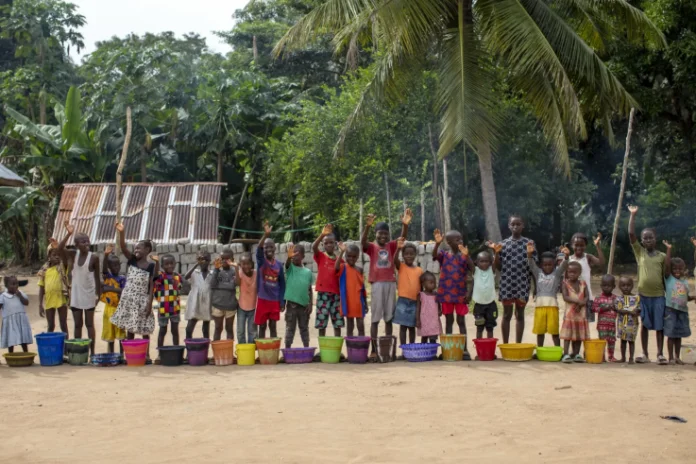
UNICEF Sierra Leone stated that the increasing impact of climate change is putting millions of children across the country at greater risk. According to UNICEF Sierra Leone, the growing impact of climate change is indeed placing millions of children across the country at increasing risk, noting a profound and escalating humanitarian challenge. Marking World Environment Day 2026, the organization noted that climate-related disasters like floods, extreme heat, and unpredictable weather patterns are disrupting essential services in Sierra Leone. These disruptions directly threaten the health, education, and overall well-being of the nation's youth. UNICEF further linked this year's World Environment Day observations to the upcoming Day of the African Child, scheduled for June 16, emphasizing the critical connection between climate action and children's well-being. This linkage shows the regional and global imperative to address climate change as a fundamental issue of child rights and development.
Climate Disasters Disrupt Essential Services
UNICEF noted that children are often the first and hardest affected when climate-related events disrupt essential services. The organization specifically pointed out that when floods destroy water facilities, classrooms become unsafe due to extreme heat, and health centres lose access to clean water during emergencies, children are often the first and hardest affected. These scenarios illustrate the immediate and severe consequences for the most vulnerable populations. For instance, floods can destroy water facilities, extreme heat makes classrooms unsafe, and health centers may lose access to clean water during emergencies. Such disruptions have a cascading effect, jeopardizing access to safe drinking water, adequate sanitation, and quality education. Sierra Leone remains highly susceptible to climate change impacts, experiencing recurring floods, ongoing environmental degradation, and increasingly unpredictable weather patterns. Sierra Leone remains one of the countries most susceptible to climate change, facing recurring floods, environmental degradation, and increasingly unpredictable weather conditions, making its population particularly vulnerable. These conditions pose significant challenges to the well-being and development of children across the nation, hindering progress in critical areas like health, nutrition, and education.
Vast Vulnerability and Economic Impact
With an estimated 41 percent of Sierra Leone’s population under the age of 15, nearly half of the country’s citizens are vulnerable to climate-related challenges. This demographic reality means that a large proportion of the population is at heightened risk from environmental shocks. The economic ramifications are significant; if effective adaptation measures are not implemented, climate impacts could reduce Sierra Leone’s Gross Domestic Product by as much as 9 to 10 percent by 2050. This potential economic downturn notes the urgent need for proactive climate action to safeguard the nation's future prosperity. Coastal flooding alone poses a substantial threat, potentially placing hundreds of millions of dollars’ worth of assets at risk. The economic cost of inaction is therefore not just theoretical but presents a concrete danger to infrastructure and livelihoods. Coastal flooding alone could place hundreds of millions of dollars’ worth of assets at risk, showing the immense financial implications of climate change for Sierra Leone.
Compounding these vulnerabilities, access to essential services remains limited for many. Only 17.8 percent of Sierra Leone’s population currently has access to basic sanitation services, while nearly 38 percent lack access to basic water services. Only 17.8 percent of Sierra Leone’s population has access to basic sanitation services, a statistic that notes significant infrastructure gaps. These deficiencies exacerbate the health and safety risks posed by climate change, particularly for children, who are more susceptible to waterborne diseases and other environmental hazards. More than six out of every ten children in Sierra Leone live in poverty, showing the deep socio-economic challenges that intersect with environmental threats. This combination of poverty and limited access to services creates a cycle of vulnerability that climate change is set to intensify.
Call for Resilient Infrastructure Investment
UNICEF called for increased investments in climate-resilient infrastructure across schools, health facilities, and communities in Sierra Leone. UNICEF called on the Government of Sierra Leone, development partners, donors and the private sector to increase investments in climate-resilient infrastructure across schools, health facilities and communities, emphasizing a multi-stakeholder approach to addressing the crisis. The organization urged the Government of Sierra Leone, development partners, donors, and the private sector to prioritize these investments. These investments are key for protecting essential services from the destructive effects of climate-related disasters. UNICEF also pressed stakeholders to strengthen systems designed to ensure the continuity of essential services during climate emergencies. UNICEF urged stakeholders to strengthen systems that ensure the continuity of water, health, education and child protection services during climate emergencies, noting the necessity of strong emergency preparedness. These critical services include water, health, education, and child protection. The appeal emphasizes the need to safeguard vulnerable populations, particularly children, from the escalating impacts of climate change in the country, ensuring their rights and well-being are protected amidst a changing climate.